
.jpeg)
Spaxentan/Sparsentan vs. Nefcon: Comparison of Drugs for the Treatment of IgA Nephropathy
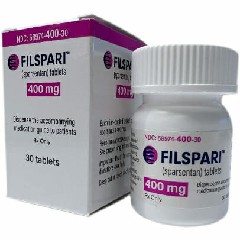
Among the drugs for the treatment of primary immunoglobulin A nephropathy (referred to as IgA nephropathy), sparsentan (also known as Sparsentan, English name Sparsentan) and budesonide enteric-coated capsules (Nefukang) have each demonstrated unique curative effects. Due to differences in patients' specific conditions, constitutions, and doctors' diagnosis and treatment plans, it is not possible to generalize which of the two drugs is better. The following is a detailed comparative analysis of sparsentane and nefucant in the treatment of IgA nephropathy:
Sparsentan, as an oral dual endothelin-angiotensin receptor antagonist (DEARA), achieves effective inhibition of two key vasoconstrictors, endothelin 1 (ET-1) and angiotensin II (Ang II), by simultaneously blocking endothelin type A (ETA) receptors and antagonizing angiotensin II type 1 (AT1) receptors. This dual inhibitory mechanism plays an important role in reducing renal inflammation and fibrosis, and is especially significant for the treatment of IgA nephropathy.
Budesonide enteric-coated capsules are the world's first drug targeting the cause ofIgA nephropathy. It specifically inhibits the production of pathogenic IgA in terminal ileal lymph nodes, thereby achieving the treatment of IgA nephropathy. This innovative therapeutic mechanism is in sharp contrast to the non-immune mechanism of sparsentan, bringing new breakthroughs in the treatment of IgA nephropathy.
In clinical trials, the therapeutic effects of sparsentane have been impressive. In the phase 3 clinical trial of PROTECT, compared with the commonly used ARB drug irbesartan, sparsentan reduced the proteinuria level of IgA nephropathy patients by more than 3 times from baseline after 36 weeks of treatment. What is more worth mentioning is that in more than 2 years of follow-up observation, sparsentan significantly slowed down the decline of renal function in patients. Compared with irbesartan, the decline in renal function slowed down by about 25%. These findings suggest that sparsentane may have more prominent advantages in the treatment of IgA nephropathy.
Sparsentan’s oral dosage form is convenient for patients to use and improves treatment compliance. At the same time, it also showed good safety and tolerability in clinical trials. However, patients also need to pay attention to possible adverse reactions when using it, such as hyperkalemia, hypotension, peripheral edema, etc., and pregnant women should not use this drug.
In the Chinese market, budesonide enteric-coated capsules have been approved for marketing and have demonstrated good therapeutic effects in practical applications. It is used primarily to treat primary tumors that are at risk for progressionIn adult patients with IgA nephropathy, it can effectively reduce the patient's proteinuria level. However, there is currently no clear research conclusion confirming whether it can significantly slow down the decline of renal function in patients with IgA nephropathy. In terms of safety, the adverse reactions that budesonide enteric-coated capsules may cause mainly include acne, hypertension, etc., but most of these reactions are mild or moderate and are usually reversible.
In summary, both sparsentane and budesonide enteric-coated capsules have certain efficacy and safety in the treatment ofIgA nephropathy. When choosing drugs, patients should comprehensively consider their own illness, physical condition, and doctor's recommendations to choose the most suitable treatment plan.
[ 免责声明 ] 本页面内容来自公开渠道(如FDA官网、Drugs官网、原研药厂官网等),仅供持有医疗专业资质的人员用于医学药学研究参考,不构成任何治疗建议或药品推荐。所涉药品可能未在中国大陆获批上市,不适用于中国境内销售和使用。如需治疗,请咨询正规医疗机构。本站不提供药品销售或代购服务。


