
.jpeg)
List of Chinese instructions for bedaquiline
1. Name: Bedaquiline, Bedaquiline
Product name: Sirui, Sirturo
2. Who can take bedaquiline? Indications?
Bedaquiline (Bedaquiline) is a diarylquinoline antimycobacterial drug used as part of combination therapy to treat adult and pediatric patients with pulmonary tuberculosis caused by Mycobacterium tuberculosis that is at least resistant to rifampicin and isoniazid (5 years and above, weighing at least 15 kg).
3. What are the side effects of bedaquiline?
The most common side effects of bedaquiline in adults areQT prolongation (abnormal electrical activity of the heart that affects the heart rhythm), nausea (feeling sick), vomiting, joint pain, elevated blood levels of liver enzymes (which may be a sign of liver problems), dizziness, and headache. Side effects in adolescents are similar to those in adults. Blood tests show that about one-third of young children develop elevated liver enzymes and other liver effects.
4. How should you take bedaquiline?
1. Recommended dosage:
For adult patients, the recommended dose of bedaquiline is 400 mg (4 of 100 mg tablets or 20 of 20 mg tablets) orally once daily for the first two weeks; then from weeks 3 to 24, the recommended dose is 200 mg (2 of 100 mg tablets or 10 of 20 mg tablets) orally three times weekly. When treatment with bedaquiline is deemed necessary after 24 weeks, treatment may be continued at a dose of 200 mg three times per week.
For pediatric patients, the recommended dose is based on body weight. For patients 15kg-30kg, the recommended dose for the first two weeks is 200mg taken orally once daily ((100mg 2 tablets or 2010 of mg tablets), then from weeks 3 to 24, the recommended dose is oral administration three times per week100 mg(100mgof 1 tablet or 20mgof tablet5 u200bu200btablets); for patients over 30kg, the recommended dose is the same as for adults.
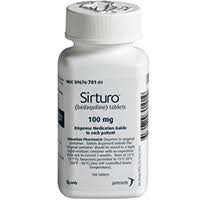
2. Medication management: Bedaquiline 100mg tablets have one administration method, and bedaquiline 20mg tablets have four different administration methods as follows:
(1)For bedaquiline100 mg tablets, take the entire tablet with water with food. Bedaquiline 20 mg tablets can be taken as a whole tablet or divided into two halves along the functional score line.
(2) For patients who are unable to swallow the entire tablet, it can be dispersed in water or taken with a drink (such as water, dairy products, apple juice, orange juice, cranberry juice or carbonated drinks). Disperse the tablets in a glass of water (5mLmaximum5 u200bu200btablets in water). Mix the contents of the cup thoroughly until the tablets are completely dispersed, and then take the contents of the cup immediately with food. To facilitate oral administration, the mixture dispersed in water may be further mixed with at least 5 mL of beverage or 1 teaspoon of soft food, and the contents of the dosing cup immediately followed by oral administration. If the total dose requires more than 5 tablets, repeat the above preparation steps using the appropriate number of additional tablets until the desired dose is reached. Make sure there are no tablets left in the cup, rinse it down with a drink or add more soft food, and take the cup contents by mouth immediately.
(3) Patients who are unable to swallow the entire tablet can also crush the bedaquiline20 mg tablet and mix it with soft food. It can be crushed immediately before use and mixed with soft food (such as yogurt, applesauce, banana puree or porridge), and then taken orally. To ensure no tablets remain in the container, add more soft food and consume immediately.
(4) Administration via feeding tube: Bedaquiline 20 mg tablets may be administered via a feeding tube (8 French or larger) by dispersing 5 tablets or less in 50 mL of non-carbonated water and mixing thoroughly. The mixture should be white to almost white, with visible particles expected. Immediately administer the medication through the feeding tube. Repeat with additional tablets until desired dose is reached. Rinse with 25mL additional water to ensure no tablet residue is present in materials used for preparation or feeding tube.
5. How to store bedaquiline?
Bedaquiline should be stored in the original container with desiccant in the bottle. Do not discard the desiccant. Avoid light and moisture. Keep container tightly closed. Storable25°C (77°F); excursions allowed between 15°C to 30°C (59°F to 86°F).
6. How does bedaquiline work?
Bedaquiline is a diarylquinoline antimycobacterial drug that inhibits mycobacterial ATP (adenosine 5'-triphosphate) synthase by binding to subunit c of an enzyme necessary for energy production by Mycobacterium tuberculosis. Bedaquiline has been shown to be active against most Mycobacterium tuberculosis isolates in vitro and in clinical infections.
7. What will happen if you take too much bedaquiline?
There is no experience with bedaquiline in the treatment of acute overdose. Take general measures to support essential life functions, including monitoring vital signs and electrocardiogram (QTc interval) in cases of intentional or accidental overdose. It is recommended to contact a poison control center for the latest recommendations for overdose management. Because bedaquiline is highly bound to proteins, dialysis is unlikely to significantly remove bedaquiline from plasma.
8. Who cannot use bedaquiline?
Do not use bedaquiline in patients with latent infection caused by Mycobacterium tuberculosis (Mycobacterium tuberculosis), drug-sensitive pulmonary tuberculosis, extrapulmonary tuberculosis, or infections caused by non-tuberculous mycobacteria.
[ 免责声明 ] 本页面内容来自公开渠道(如FDA官网、Drugs官网、原研药厂官网等),仅供持有医疗专业资质的人员用于医学药学研究参考,不构成任何治疗建议或药品推荐。所涉药品可能未在中国大陆获批上市,不适用于中国境内销售和使用。如需治疗,请咨询正规医疗机构。本站不提供药品销售或代购服务。


