
.jpeg)
Can dabrafenib mesylate/dabrafenib capsules treat lung disease?
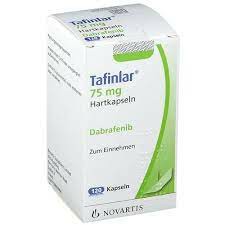
Dabrafenib is a targeted drug used to treat certain types of cancer, especially melanoma and non-small cell lung cancer (NSCLC) in patients with BRAF mutations. It works by inhibiting the activation of the BRAF protein, thereby preventing the growth and spread of tumor cells.
Research progress in this field has been quite significant regarding the efficacy of dabrafenib mesylate on lung diseases, especially the treatment of non-small cell lung cancer. Non-small cell lung cancer is a common type of lung cancer with a high incidence rate and difficult treatment. In recent years, with the development of molecular targeted therapy, especially targeted therapy targeting BRAF mutations, some patients who have been traditionally difficult to treat have gained new hope.
In June 2017, the U.S. Food and Drug Administration (FDA) expanded the indications for dabrafenib and Trametinib (Trametinib) to include the treatment of patients with metastatic non-small cell lung cancer harboring the BRAF V600E mutation. Approval is based on results from an international, multicenter, multiple short-term, non-comparative, open-label trial study BRF113928, which sequentially enrolled 93 patients who had received prior systemic therapy or were treatment-naive for advanced non-small cell lung cancer. All patients took dabrafenib 150 mg orally twice a day and trametinib 2 mg orally once a day.
In the clinical study, the overall response rate (ORR) was 63% (95% confidence interval [CI] 49%-76%), with 64% of responders having a response lasting ≥6 months, and the effective rate was 61% (95% CI, 44%-77%), with 59% of responders having a response lasting ≥6 months.
In clinical studies in patients with metastatic non-small cell lung cancer with or without BRAF V600E mutation. In 78 patients who had previously received treatment for BRAF-mutated non-small cell lung cancer, the therapeutic effect of dabrafenib 150 mg twice daily was evaluated. The ORR was 27% (95CI: 18%-38%), confirming that dabrafenib alone is effective, but the addition of trametinib is required to achieve an ORR of >40%. The most common adverse reactions (≥20%) are fever, fatigue, nausea, vomiting, diarrhea, dry skin, decreased appetite, edema, rash, chills, bleeding, cough, and dyspnea.
Dabrafenib and trametinibThe approval of concurrent dosing provides a new option for treating a rare subtype of non-small cell lung cancer and demonstrates how a drug that treats BRAF-mutated tumors can predict efficacy in one setting and provide supporting evidence for approval in another. The FDA also approved the first next-generation sequencing oncology panel test to evaluate multiple actionable mutations simultaneously, which will help select the best personalized treatment. The test was shown to accurately and reliably select patients with BRAF V600E-mutated NSCLC for whom treatment with dabrafenib and trametinib is optimal.
[ 免责声明 ] 本页面内容来自公开渠道(如FDA官网、Drugs官网、原研药厂官网等),仅供持有医疗专业资质的人员用于医学药学研究参考,不构成任何治疗建议或药品推荐。所涉药品可能未在中国大陆获批上市,不适用于中国境内销售和使用。如需治疗,请咨询正规医疗机构。本站不提供药品销售或代购服务。


