
.jpeg)
MEK inhibitor trametinib shows potential in treating JMML in children
The MEK inhibitor trametinib is an effective treatment for children with relapsed or refractory (R/R) juvenile myelomonocytic leukemia (JMML) participating in a phase II clinical trial, with 7 of 10 patients alive after a median of two years. JMML is an extremely rare and aggressive cancer that is typically diagnosed in infants and young children. The current standard of care is hematopoietic stem cell transplantation (HSCT), with or without prior chemotherapy, but relapse after transplantation is common; without a second transplant, about 90 percent of patients will die within two years, Loh said.
HSCT, one of the most intensive cancer treatments available, is being performed on these very young children. If this treatment doesn't work, the only option is to try again with the exact same treatment. Unfortunately, only 30% of patients have a long-term response to a second transplant.
Because the growth of monocytic leukemiacells was shown to depend on theRAS/MAPK cell signaling pathway,the researchers hypothesized that inhibitingMEK, a protein in this pathway, might be an effective alternative to HSCT. Previous studies have shown that MEK inhibitors including trametinib show anti-tumor activity in mouse models of monocytic leukemia.
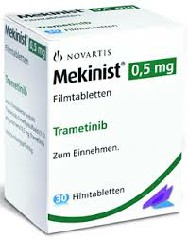
Based on these findings, researchers through the Children's Oncology Group Consortium conducted a Phase II clinical trial to evaluate the safety and efficacy of trametinib in 10 children with monocytic leukemia. The median age of the enrolled patients was 23.6 months, and all patients had monocytic leukemia carrying RAS/MAPK pathway mutations. At the start of the study, three patients had experienced disease relapse after previous HSCT, and seven patients had monocytic leukemia that was refractory to chemotherapy and had not received HSCT.
The results showed that 5 out of 10 patients had an objective response to trametinib, including 2 complete responses and 3 partial responses. Two other patients were in stable condition, and the remaining three patients had progressive disease. All seven patients who experienced stable disease or objective response were alive at a median follow-up of 24 months, and four patients who were previously ineligible for first-line HSCT were able to receive this treatment after receiving trametinib.
No patients experienced dose-limiting toxicities or cardiac dysfunction. There was one case of Grade 4 thrombocytopenia and 7 cases of Grade 3 adverse events, including hypertension, neutropenia, anemia, and sepsis.
Molecular analysis of patient samples before and after treatment showed that in addition to inhibiting RAS/MAPK signaling, trametinib also downregulated inflammatory signaling; this unexpected finding may explain the rapid resolution of many JMML-related symptoms in treated patients.
In some cases, helping patients avoid HSCT altogether. The findings suggest that for selected patients, hematopoietic stem cell transplantation may not be eliminated in all patients and that trametinib may be a less toxic alternative to HSCT.
[ 免责声明 ] 本页面内容来自公开渠道(如FDA官网、Drugs官网、原研药厂官网等),仅供持有医疗专业资质的人员用于医学药学研究参考,不构成任何治疗建议或药品推荐。所涉药品可能未在中国大陆获批上市,不适用于中国境内销售和使用。如需治疗,请咨询正规医疗机构。本站不提供药品销售或代购服务。


