
.jpeg)
Instructions for Trametinib Tablets
1. Generic name: Trametinib, Trametinib
Product name: Mekinist,Mekinist
Other names: tramatinib
2. Who can take Trametinib tablets? Indications?
1. Melanoma:
(1) Trametinib can be combined with dabrafenib as adjuvant therapy after complete resection of melanoma with BRAF V600E or V600K mutations and lymph node involvement.
(2) Trametinib, alone or in combination with dabrafenib, is indicated for the treatment of unresectable or metastatic melanoma in selected patients with BRAF V600E or V600K mutations.
Use as a single agent is not recommended in patients with melanoma whose disease has progressed after treatment with a BRAF inhibitor.
2. Non-small cell lung cancer (NSCLC): Trametinib is used in combination with dabrafenib to treat metastatic NSCLC in patients with BRAF V600E mutations.
3. Anaplastic thyroid cancer (ATC): When no satisfactory local-regional treatment options are available, it is used in combination with dabrafenib to treat locally advanced or metastatic anaplastic ATC in patients with BRAF V600E mutations.
4. BRAF V600E-mutant solid tumors: Trametinib in combination with dabrafenib is indicated for the treatment of adult and pediatric patients ≥6 years of age with unresectable or metastatic solid tumors (excluding colorectal cancer) with BRAF V600E mutations that have progressed after prior treatment and for whom there are no satisfactory alternative treatments.
3. What are the side effects of Trametinib tablets?
The most common side effects of trametinib are rash, diarrhea, fatigue, peripheral edema (swelling, especially of the ankles and feet), nausea, and acneiform dermatitis (acne-like inflammation of the skin); when used in combination with dabrafenib, the most common side effects are fever, fatigue, nausea, chills, headache, diarrhea, vomiting, arthralgia, and rash.
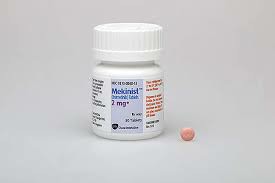
4. How should you take Trametinib tablets?
1. Before use: Orphan drug designated by the U.S. Food and Drug Administration [FDA] as a single drug or in combination for this purpose). Before initiating monotherapy or combination therapy, an FDA-approved in vitro diagnostic test (such as the BRAF kit) is required to confirm the presence of the BRAF V600E or V600K mutation.
2. Recommended dose: Trametinib mainly exists in the form of tablets. For adult patients, the recommended dose is 2 mg; for pediatric patients, the dose is related to body weight: the recommended dose for pediatric patients weighing 26-37 kg is 1 mg orally once a day; for pediatric patients weighing 38-50 kg, the recommended dose is 1.5 mg orally once a day; for patients weighing 51 kg or above, the recommended dose is 2 mg orally once a day; for patients weighing less than 26 kg, the recommended dose has not yet been determined.
3. Medication management: Take trametinib tablets at the same time every day, approximately 24 hours apart, at least 1 hour before a meal or 2 hours after a meal. Do not take a missed trametinib tablet within 12 hours of your next dose. If vomiting occurs after administration, do not take additional doses. Take your next dose at the scheduled time.
5. How to store trametinib tablets?
Trametinib tablets are available in specifications:0.5 mg and 2 mg, and should be stored refrigerated at a temperature of 2°C to 8°C (36°F to 46°F). Use original bottles. Do not remove the desiccant. Protect from moisture and light. Don't put medicine in the medicine box.
6. How does trametinib work?
Trametinib is a reversible inhibitor of mitogen-activated extracellular signal-regulated kinase1 (MEK1) and MEK2 activation and the kinase activity of MEK1 and MEK2. MEK protein is an upstream regulator of the extracellular signal-related kinase (ERK) pathway that promotes cell proliferation. The BRAF V600E mutation results in constitutive activation of the BRAF pathway including MEK1 and MEK2. Trametinib inhibits cell growth in various BRAF V600 mutation-positive tumors in vitro and in vivo.
Trametinib and dabrafenib target two different kinases in the RAS/RAF/MEK/ERK pathway The combination of trametinib and dabrafenib resulted in greater growth inhibition of BRAF V600 mutation-positive tumor cell lines in vitro and prolonged tumor growth inhibition of BRAF V700 mutation-positive tumor xenografts compared with either agent alone. In the context of BRAF mutant cancers, induction of EGFR-mediated MAPK pathway reactivation has been identified as a mechanism of intrinsic resistance to BRAF inhibitors.
7. What will happen if you take too much trametinib?
The maximum dose of trametinib evaluated in clinical trials was once daily oral administration4 mg, 10 mg orally once daily for 2 consecutive days, then 3 mg orally once daily. There were two cases of retinal pigment epithelial detachments (RPEDs) among the seven patients treated with one of the two regimens, an incidence of 28%. Because trametinib is highly bound to plasma proteins, hemodialysis may not be effective in treating an overdose of trametinib.
8. Who cannot use Trametinib tablets?
Due to known inherent resistance toBRAF inhibition, trametinib is not indicated for the treatment of patients with colorectal cancer.
[ 免责声明 ] 本页面内容来自公开渠道(如FDA官网、Drugs官网、原研药厂官网等),仅供持有医疗专业资质的人员用于医学药学研究参考,不构成任何治疗建议或药品推荐。所涉药品可能未在中国大陆获批上市,不适用于中国境内销售和使用。如需治疗,请咨询正规医疗机构。本站不提供药品销售或代购服务。


