
.jpeg)
Which generation of targeted drugs does Aceminib belong to?
Asciminib (Asciminib) is a new type of BCR-ABL targeted drug, which belongs to the third generation tyrosine kinase inhibitor (TKI). It is mainly used to treat chronic myeloid leukemia (CML), especially patients who are resistant to or have mutations in previous generations of tyrosine kinase inhibitors.
First-generationTKI drugs, such as imatinib (Imatinib), have significantly improved the treatment effect of CML patients, but some patients may develop resistance or intolerance to them. In order to solve this problem, second-generation TKI such as nilotinib (Nilotinib) and dasatinib ( Dasatinib) was developed, but these drugs still show certain limitations in the face of certain mutations, especially the T315I mutation. The third generation of aceminib was developed to deal with these drug-resistant mutations.
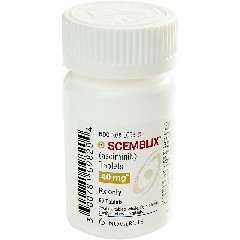
Aximini is unique in that it acts on the "myristoyl" pocket of the ABL1 protein, which is a different binding site from previous TKIs. Through this mechanism, aceminib can effectively inhibit the activity of BCR-ABL protein, including those mutation types that are resistant to other TKIs, especially the T315I mutation. This feature makes aximini show strong potential in the treatment of CML patients who are resistant to existing TKIs.
Currently, Aceminib has been approved in some countries for the treatment of CML patients who have failed two or more TKI treatments. Its side effects are mild, with common ones including fatigue, nausea, rash, etc., but it is generally well tolerated.
In general, the development and clinical application of aceminib represents further progress in the treatment of CML, especially for those patients who have failed or developed resistance to previous generations of TKI treatments, providing a new treatment option.
[ 免责声明 ] 本页面内容来自公开渠道(如FDA官网、Drugs官网、原研药厂官网等),仅供持有医疗专业资质的人员用于医学药学研究参考,不构成任何治疗建议或药品推荐。所涉药品可能未在中国大陆获批上市,不适用于中国境内销售和使用。如需治疗,请咨询正规医疗机构。本站不提供药品销售或代购服务。


