
.jpeg)
What are the functions and effects of Aceminid?
Asciminib (Asciminib) is an innovative third-generation tyrosine kinase inhibitor (TKI), specifically used to treat chronic myelogenous leukemia (CML). Its mechanism of action is different from traditional TKI drugs, and it can more effectively suppress mutations that are resistant to early drugs, especially T315I mutations. Through its unique target and mode of action, Aceminib has demonstrated remarkable efficacy in the treatment of CML, especially providing new treatment hope for patients who cannot be controlled by previous generations of drugs.
Mechanism of action
Aximini is unique in that it is the first "myristoyl" pocket inhibitor targeting the BCR-ABLkinase. BCR-ABLkinase is an abnormal fusion protein produced in CML patients. It leads to the continued growth of cancer cells by promoting cell proliferation and preventing apoptosis. Traditional TKI drugs such as imatinib (Imatinib), nilotinib (Nilotinib) and dasa Dasatinib (Dasatinib) mainly blocks the activity of BCR-ABL kinase by binding to its ATP binding site. However, some patients will develop drug-resistant mutations during long-term treatment, especially the T315I mutation. These mutations change the structure of the ATP binding site, making traditional TKI drugs ineffective.
Aximini avoids the impact of drug-resistant mutations by targetinganother part of BCR-ABL—the myristoyl binding pocket. This different mechanism of action makes Asiminib not only effective in inhibiting the activity of BCR-ABL kinase, but also in patients with drug-resistant mutations such as T315I. Because of this, aceminib has shown significant efficacy in treating patients with CML who are resistant to traditional TKI drugs.
Effect
The main effects of Aceminib are reflected in the following aspects:
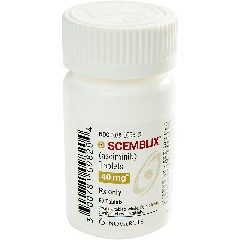
1Efficacy in drug-resistant patients: Aximini is particularly suitable for patients who have received two or more TKI treatments but failed to respond, especially those carrying the T315I mutation. Clinical trial results show that aceminib can effectively control the disease progression in such patients, and some patients can even achieve long-term remission. This provides a new treatment option for CML patients who have failed traditional treatments.
2.Higher response rate: According to clinical trial data, aceminib showed a high molecular response rate in patients with treatment-resistant CML. Research shows that after 24 weeks of treatment, the BCR-ABL gene levels of most patients dropped significantly, indicating that the proliferation of cancer cells has been effectively controlled.
3.Good tolerance: Aximini has relatively mild side effects and patients generally tolerate the drug well. Common side effects include fatigue, nausea, rash, thrombocytopenia, etc., but most side effects are mild to moderate and can be managed through dose adjustment or symptomatic treatment. Compared with traditionalTKI drugs, aceminib is safer and has relatively lower risks of long-term use.
4.Reduce the risk of disease recurrence: For those patients who have become resistant to traditionalTKI treatment, aceminib can effectively reduce the risk of disease recurrence. By targeting different binding sites, it not only prevents further growth of cancer cells, but can also delay or even reverse the progression of drug-resistant mutations, thereby giving patients longer disease-free survival.
5.Usage scenarios: Aximini is suitable for two main types ofCML patient groups: one is those who have responded to first- and second-generation TKIsPatients who are resistant to drugs, especially those who carry theT315I mutation; the second is those who cannot tolerate the side effects of otherTKI drugs. For these two types of patients, aceminib has significant efficacy and high safety.
In addition, Asiminib can also be used for CML patients who want to control their disease through more precise treatments. Its unique mechanism of action allows it to be used in combination with other drugs in certain situations to further enhance the therapeutic effect.
Asciminib (Asciminib), as a third-generation tyrosine kinase inhibitor, has demonstrated significant efficacy in the treatment of chronic myelogenous leukemia (CML). Its unique targeting mechanism makes it effective against BCR-ABL kinase, which has important clinical significance especially for drug-resistant patients carrying the T315I mutation. Aceminib not only provides better disease control but also shows advantages in side effect management and long-term efficacy. Aceminib represents a new, effective treatment option for CML patients, especially those who are resistant to or have failed other TKI drugs.
[ 免责声明 ] 本页面内容来自公开渠道(如FDA官网、Drugs官网、原研药厂官网等),仅供持有医疗专业资质的人员用于医学药学研究参考,不构成任何治疗建议或药品推荐。所涉药品可能未在中国大陆获批上市,不适用于中国境内销售和使用。如需治疗,请咨询正规医疗机构。本站不提供药品销售或代购服务。


