
.jpeg)
Can trametinib and dabrafenib cure melanoma cancer?
Targeted treatments for advanced melanoma block the activity of certain molecules within cancer cells that control cell growth. The combination treatment of Trametinib and Dabrafenib has a relatively obvious effect on patients with advanced melanoma, especially in the presence of BRAF V600E or V600K mutations. The targeted therapeutic mechanism of these two drugs effectively slows down the growth and spread of cancer cells by blocking signaling molecules within cells that control growth.
Trametinib, as aMEK inhibitor, its main mechanism of action is to block the activity of MEK, a key enzyme. MEK is an important link in the MAPK signaling pathway, which plays a vital role in regulating cell growth, proliferation and differentiation. When MEK is effectively inhibited, the MAPK signaling pathway is blocked, thereby inhibiting the growth and spread of cancer cells. Dabrafenib, on the other hand, is a BRAF inhibitor that focuses on blocking the activity of the mutated version of the BRAF molecule. BRAF is an upstream molecule of the MAPK signaling pathway. Its mutations are extremely common in melanoma and are one of the key factors leading to abnormal proliferation of cancer cells. Dabrafenib effectively cuts off the signal source of cancer cell growth by precisely targeting BRAF mutants.
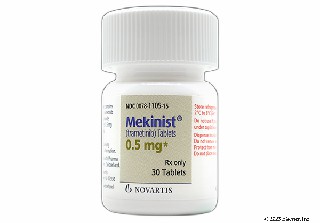
The combination of trametinib and dabrafenib is not straightforward. Clinical trials have shown that the combined application of these two drugs can produce a more significant effect, not only effectively reducing tumor size, but also significantly prolonging the survival of patients with advanced melanoma. More importantly, compared with using any one drug alone, the combination of drugs has fewer side effects and the patient's quality of life is better protected.
In 2014, the U.S. Food and Drug Administration (FDA) approved the combination of these two drugs, specifically for patients with unresectable or metastatic advanced melanoma. In combination therapy, dabrafenib slows tumor growth by targeting the BRAF V600E mutation and blocking its abnormal signaling. At the same time, trametinib further enhances the therapeutic effect by blocking the MEK signaling pathway. This combination not only improves patient survival rates but also improves quality of life.
Before starting treatment, doctors will conduct genetic mutation testing on patients to ensure that they are suitable for treatment with trametinib and dabrafenib. The biopsy sample is sent to a specialized laboratory to confirm the presence of the BRAF V600E or V600K mutation. Only patients confirmed by testing can receive this combination treatment.
In terms of medication, the recommended dose of dabrafenib is twice daily, each time50 or 75 mg capsules, the total dose is 150 mg; while trametinib is recommended once daily, the dose is 2 mg, which can be flexibly adjusted through different specifications of tablets (such as 0.5 mg, 1 mg or 2 mg). Doctors will adjust the dose in a timely manner based on the patient's response to treatment to ensure the best effect. Patients typically continue taking these drugs until tumor progression or unacceptable side effects occur. At this time, the doctor will evaluate the patient's condition and decide whether the treatment plan needs to be adjusted or the medication needs to be changed.
[ 免责声明 ] 本页面内容来自公开渠道(如FDA官网、Drugs官网、原研药厂官网等),仅供持有医疗专业资质的人员用于医学药学研究参考,不构成任何治疗建议或药品推荐。所涉药品可能未在中国大陆获批上市,不适用于中国境内销售和使用。如需治疗,请咨询正规医疗机构。本站不提供药品销售或代购服务。


