
.jpeg)
How effective is ribociclib in treating advanced breast cancer?
Ribociclib Kisqali (ribociclib) is a kinase inhibitor. Ribociclib is specifically indicated for use in combination with an aromatase inhibitor as initial endocrine therapy in postmenopausal women with hormone receptor (HR)-positive, human epidermal growth factor receptor 2 (HER2)-negative advanced or metastatic breast cancer.
The U.S. FDA approval of ribociclib is based on a randomized, double-blind, placebo-controlled international clinical trial (MONALEESA-2) in postmenopausal women with HR-positive, HER2-negative advanced or metastatic breast cancer who had not received any prior treatment. Previous treatment for advanced disease. A total of 668 women were randomly assigned to receive ribociclib plus letrozole (n=334) or placebo plus letrozole (n=334). Ribociclib 600 mg or placebo orally once daily for 21 days, followed by 7 days off, along with letrozole 2.5 mg orally once daily for 28 days. Treatment was continued until disease progression or unacceptable toxicity. A preplanned interim efficacy analysis demonstrated improvement in PFS (investigator assessment) (p<0.0001). The estimated median PFS in the ribociclib-containing arm has not yet been reached, at 14. 7 months in the placebo group. The objective response rate (ORR) in patients with measurable disease was 52.7% in the ribociclib plus letrozole group and 37.1% in the placebo plus letrozole group. Overall survival data are immature.
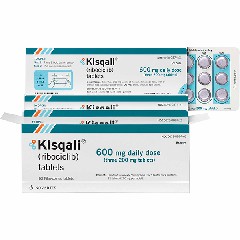
Ribociclib combined with endocrine therapy has become the standard first-line treatment for HR+/HER2- advanced breast cancer. In multiple clinical studies, ribociclib has shown superior survival data and good quality of life scores when used in combination with other endocrine therapies, such as aromatase inhibitors. In addition, the combination treatment regimen of ribociclib has been further verified in real-world studies, providing important treatment reference for clinicians.
Although ribociclib may cause some side effects, such as neutropenia, leukopenia, etc., most side effects can be alleviated by adjusting the dose or discontinuing the drug. Overall, ribociclib has a good safety profile and is relatively well tolerated by patients.
In summary, ribociclib, as a new generation of anti-cancer drugs, has demonstrated significant efficacy and good safety in the treatment ofHR+/HER2- advanced breast cancer. By inhibiting the CDK4/6 enzyme in the tumor cell cycle, it accurately attacks tumor cells and reduces the impact on normal cells, thereby improving the therapeutic effect and alleviating the pain of patients. With the deepening of research and the expansion of clinical application, ribociclib is expected to bring hope to more breast cancer patients.
[ 免责声明 ] 本页面内容来自公开渠道(如FDA官网、Drugs官网、原研药厂官网等),仅供持有医疗专业资质的人员用于医学药学研究参考,不构成任何治疗建议或药品推荐。所涉药品可能未在中国大陆获批上市,不适用于中国境内销售和使用。如需治疗,请咨询正规医疗机构。本站不提供药品销售或代购服务。


