
.jpeg)
How effective is venetoclax in treating leukemia?
Venetoclax (Venetoclax), a targeted therapy drug targeting the B cell lymphoma-2 (BCL-2) protein, has been used in chronic diseases in recent years. It has emerged in the treatment of lymphocytic leukemia (CLL), small lymphocytic lymphoma (SLL) and acute myeloid leukemia (AML), and its efficacy has attracted much attention. This article will provide an in-depth analysis of the performance of venetoclax in the treatment of leukemia, in order to provide patients and medical workers with a more comprehensive and in-depth understanding.
1. The outstanding performance of venetoclax in chronic lymphocytic leukemia (CLL)
As a common type of leukemia, the treatment of chronic lymphocytic leukemia has always attracted much attention. The emergence of venetoclax has brought new hope to CLL patients. Clinical studies have shown that when venetoclax is combined with other therapeutic drugs such as rituximab, the overall response rate of patients can be as high as 70% or more. This data undoubtedly brings good news to CLL patients. In addition, even when used as a single agent, venetoclax has shown excellent efficacy, especially for patients with relapsed or refractory CLL, and some patients can even achieve complete remission (CR). This is due to the unique mechanism of venetoclax, which can promote the apoptosis of leukemia cells by inhibiting BCL-2 protein, thereby restoring the normal cell death mechanism and significantly improving the patient's treatment response.
2. New options in the treatment of small lymphocytic lymphoma (SLL)
Small lymphocytic lymphoma is closely related toCLL and is also a malignant tumor of the lymphatic system. Venetoclax has also shown good efficacy in the treatment of SLL. Research data shows that venetoclax can effectively reduce the tumor burden of SLL patients, and many patients have achieved significant clinical responses after treatment, such as tumor shrinkage, lymph node regression, and significant improvements in hematological indicators. This provides SLL patients with new treatment options and is expected to further improve patients’ quality of life.
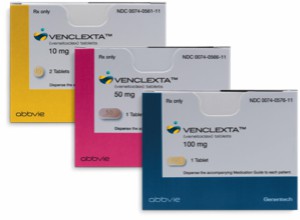
3. Auxiliary force in the treatment of acute myeloid leukemia (AML)
Venetoclax also plays an important role in the treatment of acute myeloid leukemia. When venetoclax is combined with chemotherapy drugs such as azacitidine or decitabine, it can significantly improve the response rate of AML patients, especially those with high expression of BCL-2 protein. Venetoclax enhances the effect of chemotherapy by promoting the apoptosis of leukemia cells, thus improving the survival rate of patients. This discovery provides new ideas and methods for the treatment of AML patients.
4. Pay attention to adverse reactions and tolerance to ensure safe medication use
Although venetoclax has achieved remarkable efficacy in the treatment of leukemia, it is still necessary to pay attention to the occurrence of adverse reactions during its use. Nausea, diarrhea, fatigue, and increased risk of infection are common adverse reactions during venetoclax treatment. In addition, tumor lysis syndrome (TLS) is a potentially serious complication of venetoclax treatment that requires close patient monitoring during the early stages of treatment to prevent its occurrence. Therefore, when using venetoclax, doctors should develop a reasonable dosage and medication regimen based on the patient's specific conditions, and closely monitor the patient's reactions and adverse reactions to ensure patient safety.
To sum up, venetoclax, as a new star in the field of leukemia treatment, has shown good efficacy in the treatment of CLL, SLL and AML. Although there are certain adverse effects and risks, the drug is usually well tolerated by patients with reasonable dose adjustment and monitoring. As research on venetoclax continues to deepen, its application potential in other types of leukemia and related malignancies remains to be further explored. Therefore, when using venetoclax, patients should communicate closely with their doctors to develop an individualized treatment plan to achieve the best treatment effect.
[ 免责声明 ] 本页面内容来自公开渠道(如FDA官网、Drugs官网、原研药厂官网等),仅供持有医疗专业资质的人员用于医学药学研究参考,不构成任何治疗建议或药品推荐。所涉药品可能未在中国大陆获批上市,不适用于中国境内销售和使用。如需治疗,请咨询正规医疗机构。本站不提供药品销售或代购服务。


