
.jpeg)
Can dasatinib be cured by taking 50 mg?
Dasatinib (Dasatinib) is a potent Bcr-Abl tyrosine kinase inhibitor (TKI) approved for first-line and salvage treatment of chronic phase chronic myelogenous leukemia (CML-CP). Significant side effects include pleural effusion and bone marrow suppression.
In an update to 50 mg of dasatinib daily in patients with early stage CML-CP, lower doses of dasatinib remain effective and safe. At the minimum follow-up of 12 months, 77% and 95% of patients achieved complete cytogenetic response (CCyR) 6 months and 12 months after treatment initiation, respectively. The 12-month cumulative major molecular response (MMR) rate was 81%; the 12-month MR (molecular response) 4.0 and MR4.5 rates were 55% and 49%, respectively.
The treatment was generally well tolerated. During the 5-year follow-up of the DASISION study, 28% of patients developed pleural effusion related to dasatinib, of which 62% required drug discontinuation and 41% required dose reduction.
When compared with historical data from patients treated with imatinib (n=260) and dasatinib 100 mg daily (n=259), the results obtained with the lower dose of dasatinib were more favorable. The incidence of CCyR and MMR was higher with dasatinib 50 mg daily compared with dasatinib 100 mg daily and imatinib.
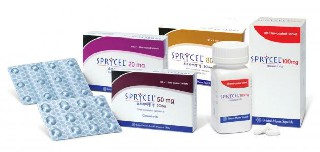
For example, the 12-month cumulative MMR rate for dasatinib 50 mg daily was 81%, which is higher than that reported for standard-dose dasatinib (46% at 12 months) and imatinib (28% at 12 months). Similarly, outcomes with low-dose dasatinib were more favorable compared with other second-generation TKIs. In the ENESTnd trial, the 12-month cumulative MMR rates for nilotinib 300 mg twice daily, nilotinib 400 mg twice daily, and imatinib 400 mg twice daily were 55%, 51%, and 27%, respectively. In the BFORE trial, the 12-month MMR rates of bosutinib and imatinib were 47.2% and 36.9%, respectively.
So far, with other second generationResults with low-dose dasatinib remain encouraging compared with TKIs]. Confirmation of these findings is assured. A randomized study comparing dasatinib 50 mg with standard doses may be considered. In addition, first-line treatment may require less intensive treatment compared with relapse treatment for all TKIs. This is the case for nilotinib (300 mg twice daily vs. 400 mg twice daily) and bosutinib (400 mg daily vs. 500 mg daily). Further dose reduction may be considered.
Several studies have evaluated whether TKIs can be safely used in patients who have achieved long-term deep molecular responses. In the EURO-SKI trial, the largest treatment-free remission trial, the 2-year molecular relapse-free survival rate in 821 patients with chronic myelogenous leukemia who received first-line imatinib, nilotinib, or dasatinib (at least MR4.0 and subsequently discontinued TKI therapy) was 52%. Compared with imatinib and standard-dose second-generation TKIs, low-dose dasatinib can achieve higher treatment-free response rates because this strategy achieves relatively faster, deeper, and more sustained molecular responses.
MostCML-CP patients are functionally cured through long-term TKI treatment. However, whether indefinite TKI treatment is necessary remains unclear. Untreated remission rates range from 40-60%, with most relapses occurring within the first 6 months of stopping treatment. One possible reason for disease relapse is that leukemia stem cells are resistant to TKI treatment. Despite undetectable BCR-ABL1 transcript levels, this resistance persists and may lead to disease relapse. reported new data showing that the combination of a Bcl-2 inhibitor (venetoclax) with a TKI enhanced cytotoxicity, depleted CML stem cells, and prolonged survival in a mouse CML model.
In conclusion, dasatinib 50 mg daily is still effective and safe as initial treatment for CML-CP. Low-dose dasatinib continues to demonstrate faster and deeper molecular responses than standard-dose dasatinib and imatinib. In addition, the safety profile of low-dose dasatinib remains consistent, and no new safety signals have been identified. Dasatinib 50 mg daily may become a new, cost-effective option for first-line treatment of CML-CP.
[ 免责声明 ] 本页面内容来自公开渠道(如FDA官网、Drugs官网、原研药厂官网等),仅供持有医疗专业资质的人员用于医学药学研究参考,不构成任何治疗建议或药品推荐。所涉药品可能未在中国大陆获批上市,不适用于中国境内销售和使用。如需治疗,请咨询正规医疗机构。本站不提供药品销售或代购服务。


