
.jpeg)
Analysis of multiple action targets of ponatinib
Ponatinib, better known as ponatinib, has become an effective drug in the treatment of leukemia. Its remarkable efficacy is mainly due to its unique and multifaceted mechanism of action, which allows it to accurately target a variety of hematological malignancies, especially those patients who have become resistant to traditional treatments.
The core mechanism of action of ponatinib lies in its excellent kinase inhibitory ability. Studies have shown that it can efficiently inhibit the in vitro tyrosine kinase activity of ABL and the difficult-to-treat T315I mutant ABL. Data show that ponatinib has outstanding inhibitory ability against these two kinases, with IC50 concentrations as low as 0.4 and 2.0 nM, which means that only a very low concentration can achieve half of the inhibitory effect. This characteristic allows ponatinib to precisely block key signaling pathways in leukemia cells, thereby curbing their abnormal proliferation.
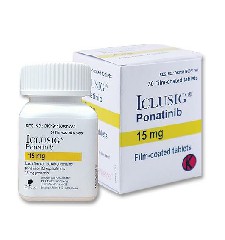
Moreover, the inhibitory range of ponatinib extends far beyond this. It can also effectively inhibit the activity of a variety of kinases including VEGFR, PDGFR, FGFR, etc., with an IC50 concentration ranging from 0.1 to 20 nM. What is more worth mentioning is that ponatinib also has excellent inhibitory effects on kinases such as KIT, RET, TIE2 and FLT3. This broad inhibitory ability enables ponatinib to demonstrate higher therapeutic efficacy and flexibility in the face of complex and changeable leukemias.
Of particular concern is that ponatinib also exhibits strong in vitro inhibitory capabilities against cells expressing native or mutatedBCR-ABL (especially the refractory T315I mutation). In experimental models of mice, treatment with ponatinib significantly reduced the size of tumors harboring these BCR-ABL mutations compared with untreated groups. This major discovery brings new hope to patients whose BCR-ABL mutations render traditional treatments ineffective.
Overall, ponatinib has shown excellent therapeutic effects and great application potential in the treatment of leukemia due to its unique and broad kinase inhibition mechanism. With the deepening of scientific research and the accumulation of clinical practice, ponatinib is expected to bring hope of cure to more leukemia patients.
[ 免责声明 ] 本页面内容来自公开渠道(如FDA官网、Drugs官网、原研药厂官网等),仅供持有医疗专业资质的人员用于医学药学研究参考,不构成任何治疗建议或药品推荐。所涉药品可能未在中国大陆获批上市,不适用于中国境内销售和使用。如需治疗,请咨询正规医疗机构。本站不提供药品销售或代购服务。


