
.jpeg)
How effective is crizotinib in treating lymphatic metastasis?
Crizotinib (Crizotinib), as a multi-target tyrosine kinase inhibitor, has shown significant efficacy in the treatment of patients with non-small cell lung cancer (NSCLC) with specific genetic mutations. However, the specific clinical efficacy of crizotinib in the treatment of lymphatic metastasis needs to be analyzed based on multiple factors.
Crizotinib mainly inhibits the activity of tyrosine kinases such as ALK (anaplastic lymphoma kinase), ROS1 and MET, blocking the growth and proliferation signaling pathways of tumor cells, thereby achieving the purpose of treating tumors. It was initially approved for the treatment of patients with advanced ALK-positive or ROS1-positive NSCLC who often achieve significant response after treatment with crizotinib.
Lymphatic metastasis is one of the common metastasis pathways of lung cancer, and it usually occurs in the late stages of lung cancer. Lymphatic metastasis not only increases the difficulty of treatment, but also affects the patient's prognosis. Therefore, effective treatment for lymphatic metastasis is of great significance to prolong the survival and improve the quality of life of lung cancer patients.
Although crizotinib is mainly used to treat NSCLC patients with specific genetic mutations, its clinical efficacy in the treatment of lymphatic metastasis is also worthy of attention.
Treatment of lymphatic metastasis forALKpositiveNSCLC patients: Multiple clinical studies have shown that crizotinib is effective in ALKpositive< /span>NSCLCIt has significant efficacy in patients, and can significantly reduce tumor volume, prolong progression-free survival (PFS) and overall survival (OS).
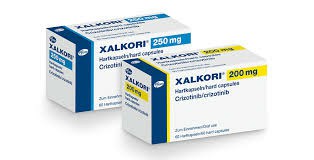
For ALKpositiveNSCLC with lymphatic metastasisPatients, crizotinib also showed good efficacy. It can effectively inhibit the growth and spread of lymphatic metastases, thereby improving the prognosis of patients.
Treatment of lymphatic metastasis in patients with other types of NSCLC: For patients with non-ALK-positive or ROS1-positive NSCLC, the efficacy of crizotinib may be relatively limited. However, some studies have shown that in some cases, crizotinib can still have a certain inhibitory effect on lymphatic metastases in these patients.
This may be related to the multi-target inhibitory effect of crizotinib. In addition to ALK and ROS1, crizotinib can also inhibit the activity of other tyrosine kinases such as MET. These kinases may also play a certain role in the occurrence and development of lymphatic metastasis.
Crizotinib is highly targeted and selective, enabling precise treatment of tumor cells with specific genetic mutations.
It can effectively inhibit the growth and spread of lymphatic metastases, thereby improving the prognosis of patients.
The efficacy of crizotinib may be affected by factors such as individual patient differences, disease severity, and whether it is accompanied by other genetic mutations. Long-term use of crizotinib may lead to the emergence of drug resistance, thereby affecting its efficacy.
Multiple clinical studies and case reports support the efficacy of crizotinib in the treatment of lymphatic metastasis. For example, in a study of patients with ALK-positive NSCLC, the PFS and OS of the crizotinib group were significantly better than those of the chemotherapy group, and similar efficacy was achieved in patients with lymphatic metastasis. In addition, some case reports also show that crizotinib has achieved significant efficacy in the treatment of ALK-positive NSCLC patients with lymphatic metastasis.
[ 免责声明 ] 本页面内容来自公开渠道(如FDA官网、Drugs官网、原研药厂官网等),仅供持有医疗专业资质的人员用于医学药学研究参考,不构成任何治疗建议或药品推荐。所涉药品可能未在中国大陆获批上市,不适用于中国境内销售和使用。如需治疗,请咨询正规医疗机构。本站不提供药品销售或代购服务。


