
.jpeg)
Is lenvatinib effective for patients with liver cancer? What are the cases?
Sincesince the U.S. Food and Drug Administration (FDA) approved lenvatinib (trade name: Lenvima) as a first-line treatment for patients with unresectable hepatocellular carcinoma (HCC) in August 2018, this drug has attracted widespread attention in the field of liver cancer treatment. The approval of lenvatinib was based on a phase 3 clinical study called REFLECT, which directly compared the efficacy and safety of lenvatinib with the then standard treatment sorafenib (trade name: Nexavar).
Results from the REFLECT study showed that lenvatinib showed encouraging results in the treatment of unresectable hepatocellular carcinoma. Compared with sorafenib, lenvatinib met the non-inferiority criterion in overall survival, with a median overall survival of 13.6 months compared with 12.3 months for sorafenib. Although the difference in overall survival between the two seems small, the advantages of lenvatinib in progression-free survival (PFS) and objective response rate (ORR) are more significant.
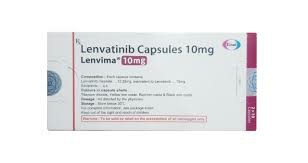
Specifically, the median progression-free survival in the lenvatinib group reached 7.3 months, almost twice that of the sorafenib group (3.6 months). This means that patients treated with lenvatinib can maintain stable disease for a longer period of time and delay disease progression. In addition, the objective response rate of lenvatinib is also much higher than that of sorafenib, 41% and 12% respectively, showing a stronger ability to shrink tumors.
These exciting data not only prove the effectiveness of lenvatinib in the treatment of liver cancer, but also provide new treatment options for the majority of liver cancer patients. Especially for patients with unresectable advanced liver cancer, lenvatinib undoubtedly brings them new hope.
In actual clinical applications, many liver cancer patients have achieved significant curative effects through lenvatinib treatment. Many of them not only prolong their survival, but also improve their quality of life and reduce their pain and suffering. These successful cases further validate the value of lenvatinib in the treatment of liver cancer.
In summary, the efficacy of lenvatinib as a first-line treatment for unresectable hepatocellular carcinoma has been fully verified. For patients with liver cancer, lenvatinib treatment is undoubtedly an option worth considering. Of course, the specific treatment plan needs to be determined based on the patient’s actual situation and the doctor’s recommendations. Currently, this drug has both an original version and an affordable generic version. Patients are asked to choose according to their needs.
[ 免责声明 ] 本页面内容来自公开渠道(如FDA官网、Drugs官网、原研药厂官网等),仅供持有医疗专业资质的人员用于医学药学研究参考,不构成任何治疗建议或药品推荐。所涉药品可能未在中国大陆获批上市,不适用于中国境内销售和使用。如需治疗,请咨询正规医疗机构。本站不提供药品销售或代购服务。


