
.jpeg)
Instructions for Ixazomib/Enleri: Product Introduction and Usage
1. Common name: Ixazomib,Ixazomib
Product name: Ninlaro, Ninlaro
Other names: ixazomib citrate capsules, ixazomib, ixazomib
2. Who can take ixazomib? Indications?
Ixazomib is indicated in combination with lenalidomide and dexamethasone for the treatment of adult patients with multiple myeloma (MM) who have received at least one prior therapy.
3. What are the side effects of ixazomib?
In combination treatment with ixazomib, the most commonly reported adverse reactions (≥20%) are thrombocytopenia, neutropenia, diarrhea, constipation, peripheral neuropathy, nausea, peripheral edema, rash, vomiting, and bronchitis; serious adverse reactions include diarrhea, thrombocytopenia, and bronchitis. After ixazomib was launched on the market, adverse events such as angioedema (immune system disease) and toxic epidermal necrolysis (skin and subcutaneous tissue disease) also occurred.
4. How should I take ixazomib?
1. Recommended dosage: The recommended starting dose of ixazomib is 4 mg, administered orally once a week on days 1, 8, and 15 of a 28-day treatment cycle; the recommended starting dose of lenalidomide is 25 mg, administered daily on days 1 to 21 of a 28-day treatment cycle; the recommended starting dose of dexamethasone is 40 mg, administered on days 1, 8, 15, and 22 of a 28-day treatment cycle. Treatment should be continued until disease progression or unacceptable toxicity.
Ixazomib should be taken once on the same day and at about the same time during the first three weeks of the four-week cycle, and should be taken at least one hour before or two hours after a meal. When initiating treatment, the importance of carefully following all dosage instructions should be discussed with the patient and the patient should be instructed to take the recommended dose as directed, as death has occurred from overdose.
2. Medication management: Ixazomib exists in the form of capsules. If the dose is delayed or missed, the dose should be taken only ≥72 hours after the next scheduled dose. A missed dose should not be taken within 72 hours of the next scheduled dose. A double dose should not be taken to make up for a missed dose. If vomiting occurs after taking the medication, the patient should not take the medication again. Patients should resume dosing at the next scheduled dose.
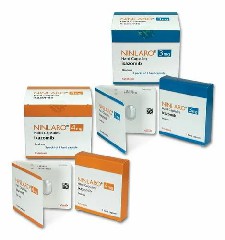
5. How to store ixazomib?
Ixazomib capsules are individually packaged inPVC-aluminum/aluminum blister packs and need to be stored at room temperature. Do not store above30°C (86°F). Do not freeze. Keep capsules in original packaging and do not open or squeeze capsules until immediately before use. Avoid direct contact with capsule contents. If capsule ruptures, avoid direct contact of capsule contents with skin or eyes. If in contact with skin, wash thoroughly with soap and water. If in contact with eyes, rinse thoroughly with water.
6. How does Isazomi work?
Ixazomib is a reversible proteasome inhibitor. Ixazomib preferentially binds to and inhibits the chymotrypsin-like activity of the β5 subunit of the 20S proteasome. Ixazomib induces apoptosis in multiple myeloma cells in vitro. Ixazomib demonstrated in vitro cytotoxicity against myeloma cells from patients who had relapsed after multiple prior treatments, including bortezomib, lenalidomide, and dexamethasone. The combination of ixazomib and lenalidomide exhibits synergistic cytotoxic effects in multiple myeloma cell lines. In vivo, ixazomib demonstrated antitumor activity in a mouse xenograft model of multiple myeloma.
7. What will happen if you overdose on ixazomib?
Overdoses, including fatal overdoses, have been reported in patients taking ixazomib. Signs of overdose include adverse reactions reported at recommended doses. Serious adverse reactions of overdose include severe nausea, vomiting, diarrhea, aspiration pneumonia, multiple organ failure, and death. There is currently no specific antidote for ixazomib overdose, and ixazomib is not dialyzable. If overdose occurs, monitor the patient closely for adverse reactions and provide appropriate supportive care.
8. Who cannot use ixazomib?
Ixazomib is not recommended for maintenance therapy or in combination with lenalidomide and dexamethasone for the treatment of newly diagnosed multiple myeloma outside of controlled clinical trials.
1. Women: According to its mechanism of action and animal reproduction research data, ixazomib can cause harm to the fetus when taken by pregnant women. Therefore, females are advised not to breastfeed during treatment and for 90 days after the last dose; Females of reproductive potential use an effective non-hormonal method of contraception during treatment and for 90 days after the last dose. Dexamethasone is known to be a weak to moderate inducer of CYP3A4 as well as other enzymes and transporters. Because ixazomib is administered with dexamethasone, the risk of reduced contraceptive efficacy needs to be considered.
2. Men: It is recommended that men with female partners of reproductive potential use effective contraceptive measures during treatment with ixazomib and within 90 days after the last dose.
3. Patients with renal impairment:Compared with patients with normal renal function, patients with severe renal impairment or end-stage renal disease requiring dialysis (The average AUC increased by 39% in patients with ESRD). Patients with severe renal impairment or ESRD requiring dialysis should have a reduced starting dose of ixazomib. Ixazomib is not dialyzable and therefore can be administered regardless of dialysis time.
[ 免责声明 ] 本页面内容来自公开渠道(如FDA官网、Drugs官网、原研药厂官网等),仅供持有医疗专业资质的人员用于医学药学研究参考,不构成任何治疗建议或药品推荐。所涉药品可能未在中国大陆获批上市,不适用于中国境内销售和使用。如需治疗,请咨询正规医疗机构。本站不提供药品销售或代购服务。


