
.jpeg)
What is the regimen of ixazomib/Enleri combined with lenalidomide?
IxazomibIxazomib combined with Lenalidomide is a new treatment option for multiple myeloma (Multiple Myeloma,; MM), aiming to improve the treatment effect and survival of patients. This regimen combines two drugs with different mechanisms to create a synergistic effect, thereby improving efficacy.
Ixazomib is an oral proteasome inhibitor that inhibits the proteasome function in cells so that abnormal proteins in cancer cells cannot be degraded. This causes tumor cells to accumulate harmful proteins, which triggers cell death. Lenalidomide is an immunomodulator that enhances the body's immune response, promotes the activity of anti-tumor cells, and also inhibits tumor growth. The combination of the two makes the treatment plan more comprehensive and can attack tumor cells from multiple aspects at the same time. This combination treatment regimen is usually suitable for patients who have had at least one prior treatment, especially those who have not responded well to conventional treatments or have relapsed.
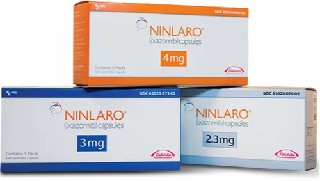
Weekly ixazomib plus lenalidomide-Dexamethasone (Rd) treatment is feasible and shows activity in patients with newly diagnosed multiple myeloma (NDMM). This phase 1/2 study (NCT01383928) evaluated the recommended phase 2 dose (RP2D), pharmacokinetics, safety and efficacy of twice weekly ixazomib plus Rd in the treatment of NDMM. Among 62 evaluable patients, the confirmed overall response rate was 94% (68% ≥ very good partial response; 24% complete response). Median progression-free survival was 24±9 months. During treatment, responses (median duration of 36 ± 9 months in patients receiving RP2D) deepened. This indicates that this regimen has strong antitumor activity.
Although the combination therapy of ixazomib and lenalidomide has achieved some clinical success, not all patients are suitable for this regimen. In the specific implementation process, the combined treatment plan is usually divided into several stages. Initially, patients will take ixazomib and lenalidomide at specific doses for fixed cycles to assess tolerability and efficacy. In the early stages of treatment, doctors will closely monitor the patient's blood routine, liver and kidney function and other related indicators to ensure the safety of the drug. Depending on the patient's response, the doctor may adjust the drug dosage.
In addition, combined medication may cause some side effects. Common side effects of ixazomib include fatigue, nausea, diarrhea, etc., while lenalidomide may cause hematological abnormalities, such as leukopenia, anemia, etc. Grade 3 drug-related adverse events (AEs) occurred in 64% of patients in clinical studies, including: rash, peripheral neuropathy, and hyperglycemia. Twice-weekly ixazomib Rd provides a number of promising long-term results for patients with NDMM, but in this setting, there may be greater toxicity than once-weekly ixazomib Rd. In order to reduce the occurrence of these side effects, doctors usually take preventive measures, such as maintaining good nutritional status, monitoring blood levels, and reducing or discontinuing medication when necessary.
As research on multiple myeloma continues to deepen, the combination treatment regimen of ixazomib and lenalidomide has become an important treatment option. The latest clinical trial results are also constantly promoting research progress in this area, and more optimized programs and combinations may emerge to further improve the therapeutic effect.
[ 免责声明 ] 本页面内容来自公开渠道(如FDA官网、Drugs官网、原研药厂官网等),仅供持有医疗专业资质的人员用于医学药学研究参考,不构成任何治疗建议或药品推荐。所涉药品可能未在中国大陆获批上市,不适用于中国境内销售和使用。如需治疗,请咨询正规医疗机构。本站不提供药品销售或代购服务。


