
.jpeg)
A concise medication guide for patients with lung cancer treated with platinib
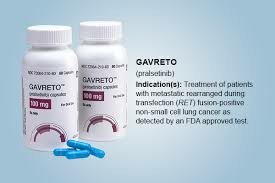
Pralsetinib (English name: Pralsetinib), trade name Pujihua, is a highly efficient and highly selective RET inhibitor targeted drug, mainly used to treat locally advanced or metastatic non-small cell lung cancer (NSCLC) with positive RET gene fusion. For patients with lung cancer, the correct use of platinib is the key to ensuring therapeutic efficacy and reducing adverse reactions. The following is a concise medication guide for patients with lung cancer:
1. Preparation before taking medicine
1. Confirmation and genetic testing: Before using platinib, it is necessary to be diagnosed with non-small cell lung cancer and confirm the presence ofRET gene fusion through genetic testing.
2. Doctor consultation: Before taking medicine, be sure to consult a professional doctor to understand the use of the medicine and possible adverse reactions.
2. Medication method
1. Dosage and frequency: The recommended dose for adult patients is once a day, 400 mg (4 capsules) each time, taken orally on an empty stomach. Avoid eating for at least 2 hours before taking and at least 1 hour after taking to ensure optimal absorption.
2. Treatment of missed doses: If you miss a dose, you should take it as soon as possible on the same day. However, if you vomit after taking the medicine, you do not need to take another dose and continue taking the next dose as originally planned.
3. Dose adjustment: Based on the patient's treatment response and adverse reactions, the doctor may adjust the drug dosage. If the dose is reduced to the lowest dose (100 mg per day) and still not tolerated, the drug must be permanently discontinued.
3. Precautions
1. Monitoring of adverse reactions: During the use of platinib, blood pressure, liver function, renal function and other indicators need to be closely monitored. Common adverse reactions include hypertension, liver toxicity, musculoskeletal pain, constipation, diarrhea, fatigue, etc. If serious adverse reactions occur, seek medical attention immediately.
2. Avoid drug interactions: During the use of platinib, you should avoid coadministration with potentCYP3A4 and P-gp inhibitors to avoid increasing drug concentration and the risk of adverse reactions. If you need to use other medicines, be sure to tell your doctor.
3. Medication for special groups: Platinib is contraindicated in pregnant and lactating women. No significant differences were observed in pharmacokinetics, safety, and efficacy in elderly patients, but caution is still required when using it.
4. Regular follow-up visits
During the use of Platinib, regular follow-up visits are required to evaluate drug efficacy and adverse reactions. The doctor will adjust the treatment plan and dosage according to the patient's specific situation.
4. Medical Insurance and Price
Platinib is currently on the market in China, but it has not yet been included in medical insurance. Patients need to purchase it at their own expense, which costs tens of thousands of yuan per box. Please consult the local hospital pharmacy for details. Laos provides a new option for patients with greater financial pressure. The version produced by Lucius Pharmaceuticals sells for about more than 4,000 yuan per box.
In summary, Platinib is an efficient and highly selectiveRET inhibitor targeted drug, providing a new treatment option for patients with RET gene fusion-positive non-small cell lung cancer. When using platinib, patients must strictly follow medical instructions, pay attention to medication methods and adverse reaction monitoring, maintain good living habits, and undergo regular follow-up visits to ensure treatment effects and medication safety.
[ 免责声明 ] 本页面内容来自公开渠道(如FDA官网、Drugs官网、原研药厂官网等),仅供持有医疗专业资质的人员用于医学药学研究参考,不构成任何治疗建议或药品推荐。所涉药品可能未在中国大陆获批上市,不适用于中国境内销售和使用。如需治疗,请咨询正规医疗机构。本站不提供药品销售或代购服务。


