
.jpeg)
How effective is Canafenib/Encofenib in the treatment of colon cancer?
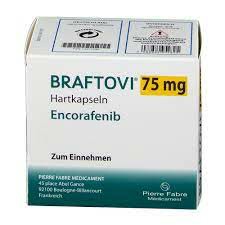
Canafenib/Encorafenib is a highly specific competitive inhibitor of RAF that only acts on tumor cells expressing the BRAF V600E mutant protein. Compared with other BRAF inhibitors, it shows more sustained pharmacodynamic activity.
Although the efficacy ofBRAF inhibitors has been demonstrated in other cancers such as melanoma and non-small cell lung cancer, their effectiveness as monotherapy for BRAF V600E mutant metastatic colorectal cancer (mCRC) remains limited due to reactivation of the mitogen-activated protein (MAP) kinase signaling pathway through overexpression of other RAF proteins such as CRAF and epidermal growth factor receptor (EGFR). Therefore, the combination of a BRAF inhibitor and an EGFR monoclonal antibody enhances the therapeutic effect of BRAF V600E mCRC patients.
Involving Phase III BEACON in 665 patients with BRAF V600E mCRC receiving second- or third-line treatment The CRC trial showed that the combination of canafenib and cetuximab (with or withoutbinimetinib) significantly improved objective response rate (ORR) and overall survival (OS) compared with standard treatment (irinotecan-based chemotherapy plus cetuximab), with an acceptable safety profile.
Although the two experimental groups cannot be directly compared due to study design, the latest results of the trial show that the ORR of the triple therapy group was 26.8%, while the ORR of the triple targeted drug combination therapy group was 19.5%. However, this did not translate into prolonged progression-free survival (PFS) or OS. In addition, the incidence of grade ≥3 adverse events (AEs) in patients receiving canafenib/cetuximab/binimetinib triple therapy (65.8%) was higher than that in patients receiving canafenib/cetuximab triple therapy (57.4%).
For all these reasons, only the combination of canafenib and cetuximab was approved as the new standard of care for BRAF V600E-mutated mCRC in 2020, following systemic treatment in second- or third-line treatment by the European Medicines Agency (EMA), the U.S. Food and Drug Administration (FDA) and other regulatory agencies.
After demonstrating the efficacy of a new therapy in a randomized trial, real-world data become critical to analyze its efficacy and tolerability in all patients who may not necessarily meet the eligibility criteria for registration in a trial (e.g., due to advanced age, comorbidities, poor overall health). This brings additional information and helps position new treatments within global treatment strategies for these patients. Three real-world studies have recently been published, with sample sizes ranging from 81 to 166 patients, and median follow-up times remaining relatively short, ranging from 9.7 to 14.5 months.
Regarding the results of the real-world study, which showed that 55.7% of patients received at least one subsequent course of treatment in second-line therapy, compared with only 39.6% in third-line therapy, irinotecan- and oxaliplatin-based treatments were the first choice after this targeted therapy. The study also showed that patients treated earlier in the second-line setting had longer post-expression survival, suggesting that starting this new combination as soon as possible after failure of first-line therapy may be beneficial.
[ 免责声明 ] 本页面内容来自公开渠道(如FDA官网、Drugs官网、原研药厂官网等),仅供持有医疗专业资质的人员用于医学药学研究参考,不构成任何治疗建议或药品推荐。所涉药品可能未在中国大陆获批上市,不适用于中国境内销售和使用。如需治疗,请咨询正规医疗机构。本站不提供药品销售或代购服务。


