
.jpeg)
Midostaurin instructions, indications, usage and dosage, side effects
Midostaurin, the English name isMidostaurin, the trade name is Rydapt, is a small molecule drug developed by Novartis Pharmaceuticals. It is primarily targeted at the treatment of leukemias, specifically in adults with newly diagnosed acute myeloid leukemia (AML) with FLT3 mutations, and in adults with systemic mastocytosis (SM), including aggressive systemic mastocytosis (ASM), systemic mastocytosis with associated hematologic neoplasms (SM-AHN), or mast cell leukemia (MCL).
The main mechanism of action of midostaurin is to control the proliferation and spread of cancer cells by inhibiting the activity of multiple kinases, includingFLT3, KIT, PDGFRA, PDGFRB, etc. In AML, midostaurin can inhibit the activity of FLT3, prevent the signaling of FLT3 receptors, control and alleviate the abnormal proliferation of bone marrow cells caused by FLT3 mutations, and then promote the apoptosis of leukemia tumor cells. In mastocytosis, midostaurin blocks cancer cell proliferation and histamine release by inhibiting KIT kinase signaling.
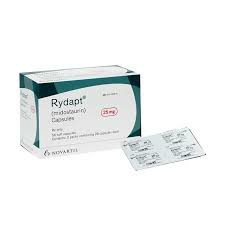
When using midostaurin, it is recommended to take it with food and to reduce the risk of nausea and vomiting by taking antiemetics. For patients with AML, midostaurin is usually administered 50 mg twice a day on days 8-21 of each cycle of induction therapy with cytarabine and daunorubicin and on days 8-21 of each cycle of consolidation chemotherapy with high-dose cytarabine. For SM patients, including ASM, SM-AHN and MCL, the recommended dosage is 100mg twice a day. However, the specific usage and dosage need to be determined according to the patient's specific condition and the guidance of the doctor.
Although midostaurin has shown significant efficacy in the treatment of leukemia, it also inevitably brings some side effects. Common side effects include nausea, vomiting, diarrhea, edema, musculoskeletal pain, fatigue, upper respiratory tract infection, etc. In addition, there are some less common side effects, such as fever, cough, shortness of breath, nose bleeding, kidney failure, etc. The incidence and severity of these side effects vary between individuals, so the patient's response needs to be closely monitored during use and the treatment plan should be adjusted in a timely manner according to the situation.
In addition to the common side effects mentioned above, midostaurin may also cause some serious adverse reactions, such as pulmonary toxicity. Therefore, during the use of midostaurin, special attention should be paid to observing the patient for signs or symptoms of lung damage. Once found, use should be stopped immediately and corresponding treatment measures should be taken.
In summary, midostaurin, as a multi-target kinase inhibitor, plays an important role in the treatment of leukemia. However, due to the variety of side effects and individual differences, caution needs to be exercised during use and a doctor's guidance must be followed. Through reasonable medication regimens and close monitoring, we can maximize the efficacy of midostaurin while reducing the impact of adverse reactions on patients.
[ 免责声明 ] 本页面内容来自公开渠道(如FDA官网、Drugs官网、原研药厂官网等),仅供持有医疗专业资质的人员用于医学药学研究参考,不构成任何治疗建议或药品推荐。所涉药品可能未在中国大陆获批上市,不适用于中国境内销售和使用。如需治疗,请咨询正规医疗机构。本站不提供药品销售或代购服务。


