
.jpeg)
What is the maintenance treatment regimen for Ixazomib/Enleri?
Ixazomib/Ixazomib (Ixazomib), as an oral proteasome inhibitor for multiple myeloma (MM), plays an important role in maintenance treatment. The main goal of maintenance treatment is to delay the recurrence of the disease and improve the patient's quality of life. The use of ixazomib is often combined with other drugs to form a comprehensive treatment plan to enhance the efficacy.
Ixazomib is a second-generation 20S proteasome small molecule inhibitor approved for the treatment of multiple myeloma. Bortezomib's inhibition of the 20S proteasome has been confirmed as a therapeutic target for myeloma. However, the oral formulation of ixazomib may be more suitable as maintenance therapy. The established safety profile suggests that ixazomib is generally well tolerated with less peripheral neuropathy compared with bortezomib, although upper and lower gastrointestinal toxicities have been reported. Ixazomib has shown efficacy in combination with immunomodulators and steroids in relapsed myeloma and as maintenance therapy after first-line autologous hematopoietic stem cell transplantation.
In maintenance regimens, ixazomib is typically used as a follow-up course after initial treatment when patients enter complete or partial remission. Treatment at this stage generally lasts for a long time, and the specific course of treatment depends on the patient's individual condition, drug resistance, and side effects. Typically, doctors will develop a personalized maintenance treatment plan based on the patient's condition and response.
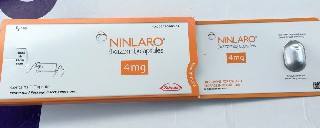
The usual regimen for maintenance therapy is once-weekly oral administration, often in combination with other adjuvant medications, such as dexamethasone or the other immunomodulator lenalidomide. This combination improves treatment effectiveness while reducing the risk of disease recurrence. In addition, maintenance therapy may also take into account patient tolerance to ensure that patients can continue treatment without affecting quality of life.
In practice, there is no unified standard for the duration of maintenance treatment. Many clinical studies have shown that maintenance treatment should last at least12 months or even longer. This is because effective maintenance therapy can not only prolong progression-free survival (PFS), but also help improve overall survival (OS). During this process, it is necessary to regularly monitor the patient's hematological indicators and renal function in order to adjust the treatment plan in a timely manner.
In addition, during maintenance treatment, patients need to pay attention to the side effects of the drug, including but not limited to gastrointestinal reactions, thrombocytopenia, etc. Some patients may experience mild side effects during maintenance treatment, and doctors will usually make adjustments based on these reactions, such as reducing the dose or temporarily discontinuing the medication.
Psychological support of the patient is also very important in the management of maintenance therapy. Myeloma is a chronic disease, and patients may feel anxious and uneasy during treatment. Therefore, communication with medical staff and family members is crucial. A professional care team can provide the necessary support and guidance to help patients through the challenges of treatment.
[ 免责声明 ] 本页面内容来自公开渠道(如FDA官网、Drugs官网、原研药厂官网等),仅供持有医疗专业资质的人员用于医学药学研究参考,不构成任何治疗建议或药品推荐。所涉药品可能未在中国大陆获批上市,不适用于中国境内销售和使用。如需治疗,请咨询正规医疗机构。本站不提供药品销售或代购服务。


