
.jpeg)
Instructions for Itovebi (inavolisib)-u200c inalisib
1. Name:Itovebi, inavolisib, inavolisib (transliteration)
2. Indications:
Itovebi (inavolisib), in combination with palbociclib and fulvestrant, is indicated for the treatment of adult patients with endocrine-resistant, PIK3CA-mutated, hormone receptor (HR)-positive, human epidermal growth factor receptor 2 (HER2)-negative, locally advanced or metastatic breast cancer (BC) detected by an FDA-approved test who relapses on or after completion of adjuvant endocrine therapy.
3. Usage and dosage:
1. Before treatment: Select patients with HR-positive, HER2-negative, locally advanced or metastatic breast cancer to be treated with Itovebi based on the presence of one or more PIK3CA mutations in plasma specimens. Assess fasting plasma glucose (FPG)/blood glucose (FBG) and hemoglobin A1C (HbA1C) before starting Itovebi and periodically during treatment, and optimize blood glucose.
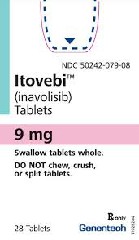
2. Recommended dose: Itovebi is available in the form of tablets. The recommended dose is 9 mg taken orally once a day, with or without food, until disease progression or unacceptable toxicity occurs. When coadministering Itovebi with palbociclib and fulvestrant, the recommended dose of palbociclib is 125 mg orally administered once daily for 21 days, followed by 7 days off treatment, forming a 28-day cycle.
3. Medication management: Patients take Itovebi at approximately the same time every day. Swallow tablets whole. Do not chew, crush, or separate before swallowing. For premenopausal and perimenopausal women, use luteinizing hormone-releasing hormone (LHRH) agonists according to local clinical practice. For men, consider using an LHRH agonist according to local clinical practice.
If the patient misses a dose, instruct the patient to take the missed dose as soon as possible within 9 hours. After 9 hours have elapsed, instruct patients to skip the dose and take the next dose at the scheduled time. If the patient vomits a dose, instruct the patient not to take additional doses that day and to continue the regular dosing schedule the next day.
4. Dose adjustment: In order to control adverse reactions, consider interrupting treatment or reducing the dose. It is recommended that the initial dose be reduced to orally once a day6mg;if further dose reduction is necessary, reduce the dose to orally once a day3mg.
(1) The recommended starting dose of Itovebiin patients with moderate renal impairment (eGFR 30 to <60mL/min based on CKD-EPI) is 6 mg orally once daily.
4. Adverse reactions:
In clinical studies of Itovebi, the most common (≥20%) adverse reactions (including laboratory abnormalities) included neutropenia, decreased hemoglobin, increased fasting glucose, thrombocytopenia, lymphopenia, stomatitis, diarrhea, decreased calcium, fatigue, decreased potassium, increased creatinine, increased ALT, nausea, decreased sodium, decreased magnesium, rash, decreased appetite, COVID-19 infection, and headache.
5. Supply and storage:
Itovebiis available in specifications of 3mg*28 tablets and 9mg*28 tablets. It should be stored at 20°C to 25°C (68°F to 77°F), with an allowable deviation of 15°C to 30°C (59°F to 86°F).
6. Special groups:
1. Women: There are no data on the presence of inavolisib or its metabolites in breast milk, its effects on milk production or breastfed children. Due to the potential for serious adverse reactions in breastfed children, advise lactating women not to breastfeed during treatment and for 1 week after the last dose; advise females of reproductive potential to use an effective non-hormonal method of contraception during treatment and for 1 week after the last dose.
2. Males: Male patients with female partners of reproductive potential are recommended to use effective contraceptive measures during treatment with Itovebi and within 1 week after the last dose.
7. Mechanism of action:
Inavolisib is an inhibitor of phosphatidylinositol 3-kinase (PI3K) and mainly has inhibitory activity against PI3Kα. In vitro, inavolisib induces the degradation of mutated PI3K-catalyzed α subunit p110α (encoded by the PIK3CA gene), inhibits the phosphorylation of the downstream target AKT, reduces cell proliferation, and induces apoptosis in PIK3CA-mutated breast cancer cell lines. In vivo, inavolisib reduced tumor growth in a PIK3CA-mutated, estrogen receptor-positive breast cancer xenograft model. The combination of inavolisib with palbociclib and fulvestrant increased tumor growth inhibition compared with each treatment alone or the dual combination.
[ 免责声明 ] 本页面内容来自公开渠道(如FDA官网、Drugs官网、原研药厂官网等),仅供持有医疗专业资质的人员用于医学药学研究参考,不构成任何治疗建议或药品推荐。所涉药品可能未在中国大陆获批上市,不适用于中国境内销售和使用。如需治疗,请咨询正规医疗机构。本站不提供药品销售或代购服务。


