
.jpeg)
Can Pirfenidone/Acerex treat pulmonary fibrosis?
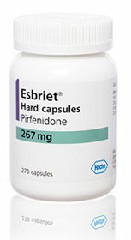
Pirfenidone/Pirfenidone is a drug used to treat idiopathic pulmonary fibrosis (IPF). Its main mechanism of action is to slow down the progression of pulmonary fibrosis by inhibiting excessive fibrosis response. In addition, pirfenidone may further improve patients' lung function through other mechanisms, such as anti-inflammatory effects.
In two major studies involving779 patients with IPF, pirfenidone was more effective than placebo (a dummy treatment) in slowing the worsening of lung function. The first study also compared two doses of pirfenidone (399 mg and 801 mg three times a day). In both studies, the primary measure of efficacy was changes in patients' lung function after 72 weeks of treatment, as measured by their "forced vital capacity" (FVC). FVC is the maximum amount of air a patient can forcefully exhale after taking a deep breath, and decreases as the condition worsens.
In the first study, patients taking pirfenidone had a smaller decrease in FVC after 72 weeksthan those taking placebo. The first study also found that pirfenidone was most effective at higher doses. The higher-dose results from the first study, combined with the results from the second study (involving the same higher dose), showed that patients taking pirfenidone had an average reduction in FVC of 8.5%, compared with an 11% reduction in patients taking placebo.
Analysis of data from these two studies, as well as from a third study, looked at the role of pirfenidone indifferent stages of IPF (advanced and non-advanced disease). Patients are classified as having advanced IPF if their FVC is less than 50 percent and/or the lung's carbon monoxide diffusing capacity (a measure of the lung's ability to transfer gas from inhaled air to the blood) is less than 35 percent. These analyzes included 170 patients with advanced and 1077 patients with non-advanced IPF, respectively.
Pirfenidone was more effective than placebo in slowing the deterioration of lung function in patients with advanced and non-advanced IPF. After 52 weeks of treatment, patients with advanced IPF who received pirfenidone had a 46% reduction in FVC (FVC decreased by 151 mL in the pirfenidone group compared with 278 mL in the placebo group) and in patients with non-advanced IPF by 41% (FVC decreased by 129 mL in the pirfenidone group compared with 217 mL in the placebo group).
In recent years, pirfenidone has been shown to be effective not only in idiopathic pulmonary fibrosis but has also been evaluated in other types of pulmonary fibrotic disease. This discovery has attracted widespread attention from clinicians and researchers, who are looking forward to its potential application in more lung diseases.
In addition to its application in pulmonary fibrosis, pirfenidone has also been gradually studied for the treatment of myocardial fibrosis. Myocardial fibrosis is a common feature of many types of heart disease, usually due to ongoing damage to myocardial cells, leading to the progressive deposition of extracellular matrix. This process may trigger a vicious cycle, leading to continued structural and functional changes in the myocardium, thereby aggravating symptoms such as heart failure. No major anti-fibrotic drugs are currently approved for the treatment of heart failure, making pirfenidone research even more interesting.
[ 免责声明 ] 本页面内容来自公开渠道(如FDA官网、Drugs官网、原研药厂官网等),仅供持有医疗专业资质的人员用于医学药学研究参考,不构成任何治疗建议或药品推荐。所涉药品可能未在中国大陆获批上市,不适用于中国境内销售和使用。如需治疗,请咨询正规医疗机构。本站不提供药品销售或代购服务。


