
.jpeg)
Does pirfenidone/Acerex have the effect of reducing urinary protein?
Pirfenidone/Pirfenidone is an anti-fibrotic drug mainly used to treat idiopathic pulmonary fibrosis (IPF). In recent years, studies have shown its potential role in other diseases, attracting the attention of the scientific community. Discussion of whether pirfenidone can reduce urinary protein has mainly focused on its effects on patients with kidney disease, especially those with chronic kidney disease (CKD) and diabetic nephropathy (DN).
Urine protein is an important marker of chronic kidney disease and a key indicator for assessing the degree of renal function damage. Increases in urinary protein are often associated with tubular and glomerular damage, and these injuries are often closely related to inflammation, oxidative stress, and fibrotic processes. Pirfenidone, an oral pyridone analog (5-methyl-1-phenyl-1H-pyridin-2-one), is approved for clinical use in idiopathic pulmonary fibrosis. In fact, this compound has been reported to exhibit not only antifibrotic but also anti-inflammatory and antioxidant activities in several animal models of progressive fibrotic diseases.
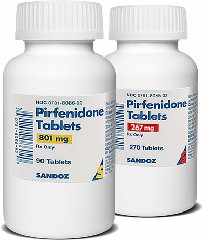
Specifically, in experimental models of kidney injury, such as subtotal nephrectomy, hypertension, calcineurin inhibitor nephropathy, and diabetic nephropathy, pirfenidone administration reduced proteinuria, lowered the rate of loss of glomerular filtration rate (GFR), reduced interstitial fibrosis and macrophage infiltration, improved mitochondrial dysfunction, and reduced mesangial matrix expansion. In support of this, a randomized, double-blind, placebo-controlled study in subjects with diabetic nephropathy found that after one year of treatment, the estimated glomerular filtration rate (eGFR) increased significantly in the pirfenidone-treated group, while the estimated glomerular filtration rate decreased more in the placebo group. In another small trial of patients with focal and segmental glomerulosclerosis, pirfenidone reduced the rate of eGFR loss.
Although pirfenidone is known to have sustained antifibrotic effects, its antioxidant and anti-inflammatory properties allow the hypothesis that pirfenidone may be effective in reducing ischemia/reperfusion-induced renal injury. However, although there have been some preliminary studies suggesting that pirfenidone may have the potential to reduce urinary protein, current research on its use in this area remains limited and has mixed results. Therefore, the use of pirfenidone to specifically target the reduction of urinary protein has not been widely accepted in clinical practice. In addition, the side effects of pirfenidone also require attention, including gastrointestinal reactions, rash, and abnormal liver function. These side effects may limit its application in certain patient groups.
In summary, pirfenidone, as an anti-fibrotic drug, has gradually attracted attention for its application in renal diseases, especially showing some promise in improving renal function and reducing urinary protein. However, its specific mechanism and long-term effect in reducing urinary protein still require further clinical trials and research to verify its effectiveness and safety. On this basis, future studies may reveal the potential for pirfenidone to be used more broadly in the treatment of kidney disease.
[ 免责声明 ] 本页面内容来自公开渠道(如FDA官网、Drugs官网、原研药厂官网等),仅供持有医疗专业资质的人员用于医学药学研究参考,不构成任何治疗建议或药品推荐。所涉药品可能未在中国大陆获批上市,不适用于中国境内销售和使用。如需治疗,请咨询正规医疗机构。本站不提供药品销售或代购服务。


