
.jpeg)
Does cabergoline inhibit prolactin secretion?
Cabergoline inhibits prolactin secretion. Cabergoline, as an ergot derivative, is a long-acting dopamine receptor agonist. It plays an important role at the level of the hypothalamus and pituitary gland, inhibiting the synthesis and secretion of prolactin (PRL).
Cabergoline can selectively and effectively bind to dopamine receptors2. This property enables it to potently and long-lasting inhibit the secretion of prolactin. By stimulating dopamine receptors, cabergoline suppresses prolactin for up to two weeks, thereby significantly reducing prolactin levels in the serum.
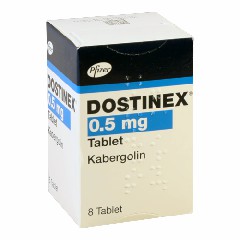
Cabergoline is primarily used to treat hyperprolactinemia, a condition caused by an endocrine disorder characterized by abnormally elevated prolactin levels. In clinical practice, cabergoline has been proven to be an effective drug in reducing blood prolactin levels and is therefore widely used in the treatment of hyperprolactinemia.
Compared with other drugs for the treatment of hyperprolactinemia, such as bromocriptine, cabergoline has the advantage of long action time and relatively minor side effects.
Although bromocriptine can also reduce prolactin levels, it requires frequent administration and may cause more adverse reactions. Cabergoline provides a more convenient and safer treatment option.
Although cabergoline is excellent at suppressing prolactin secretion, its use must still be done under the guidance of a physician.
Patients should regularly undergo six endocrine hormone and pituitary magnetic resonance examinations to ensure the effectiveness and safety of the drugs.
Additionally, cabergoline may not be suitable for use in all patients with hyperprolactinemia, particularly those who are insensitive to dopamine agonists or have other special circumstances.
[ 免责声明 ] 本页面内容来自公开渠道(如FDA官网、Drugs官网、原研药厂官网等),仅供持有医疗专业资质的人员用于医学药学研究参考,不构成任何治疗建议或药品推荐。所涉药品可能未在中国大陆获批上市,不适用于中国境内销售和使用。如需治疗,请咨询正规医疗机构。本站不提供药品销售或代购服务。


