
.jpeg)
What is thrombocytopenia? Is it serious?
Thrombocytopenia, medically known asthrombopenia, is a common bleeding disorder of the blood system. It refers to an abnormal decrease in the number of platelets in peripheral blood, usually less than 100*10^9/L. Platelets are the smallest cells in the blood, produced by megakaryocytes, and have hemostatic and coagulation functions. They are essential for maintaining the integrity of the vascular endothelium and promoting the blood coagulation process.
Thrombocytopenia may result from a variety of causes, including disease, drugs, infection, genetics, abnormal hormone secretion in the body, etc. Common diseases include aplastic anemia, leukemia, myelodysplastic syndrome, etc. Aplastic anemia is a bone marrow hematopoietic dysfunction caused by a variety of reasons, resulting in a decrease in red blood cells in the whole blood, including thrombocytopenia. Leukemia is a tumor disease that occurs in the hematopoietic system. Leukemia cells proliferate out of control and inhibit normal hematopoietic function, resulting in thrombocytopenia. Myelodysplastic syndrome is a tumor disease originating from hematopoietic stem cells. Due to abnormal bone marrow hematopoietic function, it affects the development of blood cells, causing thrombocytopenia.
Symptoms of thrombocytopenia vary in severity, depending on the degree of thrombocytopenia and bleeding. When the platelet count in peripheral blood is <50*10^9/L, it can cause bleeding in the skin and mucous membranes. When the platelet count is <20*10^9/L, it may cause gastrointestinal secretion and urethral bleeding. When the platelet count <10*10^9/L, it may cause cerebral hemorrhage, which may even threaten the patient's life in severe cases.
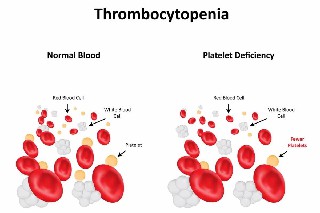
The treatment principles of thrombocytopenia mainly include etiological treatment, symptomatic treatment and supportive treatment. For disease-induced thrombocytopenia, treatment of the underlying disease is key. For example, immune thrombocytopenia (ITP) can be treated with glucocorticoids, gamma globulin, and splenectomy; for aplastic anemia, immunosuppressive regimens can be used. Platelet transfusion is mainly used to prevent and treat bleeding symptoms in patients with thrombocytopenia or platelet function deficiency, and to restore and maintain the body's normal hemostasis and coagulation functions, but it is not suitable for all thrombocytopenia conditions.
In addition, dietary treatment is also an important adjunct to thrombocytopenia. The principles of dietary therapy are mainly to nourish qi and blood, nourish yin and cool blood, and stop bleeding. For example, dietary prescriptions such as ginseng lotus porridge, red dates, sheep tibia glutinous rice porridge, Imperata root and lotus root decoction, etc., all have certain curative effects.
In daily life, patients with thrombocytopenia should avoid strenuous exercise and collisions to avoid bleeding. At the same time, drugs that may cause thrombocytopenia, such as aspirin, should be avoided. Eat a balanced diet rich in vitaminsFoods containing C and iron, such as fresh fruits, vegetables, meat, etc., can also help increase platelet levels. In addition, it is also very important to pay attention to personal hygiene and avoid infection.
The severity of thrombocytopenia requires a comprehensive consideration of the degree of thrombocytopenia and bleeding. Generally speaking, if the platelet count is above 30 and you are not engaged in work that increases the risk of bleeding, the risk is relatively small. However, if the platelet count is lower than 20, there is a risk of spontaneous bleeding, and serious conditions such as skin and mucous membrane bleeding and visceral bleeding may occur, which may even be life-threatening. Therefore, it is very important for patients with thrombocytopenia to seek medical treatment promptly, find the cause, and carry out standardized and reasonable treatment.
Take drugs that promote platelet production as an example. Common drugs include Romiplostim, Eltrombopag, and Avatrombopag. They can help the patient's bone marrow produce more platelets, but such drugs may increase the risk of blood clots.
[ 免责声明 ] 本页面内容来自公开渠道(如FDA官网、Drugs官网、原研药厂官网等),仅供持有医疗专业资质的人员用于医学药学研究参考,不构成任何治疗建议或药品推荐。所涉药品可能未在中国大陆获批上市,不适用于中国境内销售和使用。如需治疗,请咨询正规医疗机构。本站不提供药品销售或代购服务。


