
.jpeg)
Instructions for Rubicatin/Rubicatin
1. Common name: Lurbinectedin
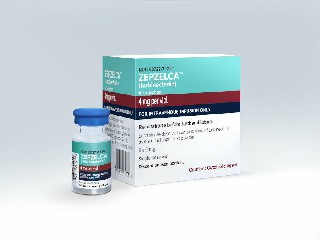
Product name:Zepzelca
Full name: Rubicatin/Rubicardin (transliteration)
2. Indications:
Lurbinectedin is indicated for the treatment of adult patients with metastatic small cell lung cancer (SCLC) whose disease has progressed during or after platinum-based chemotherapy.
3. Usage and dosage:
1. Before medication: Consider using the following pre-infusion drugs for antiemetic prevention: corticosteroids (intravenous dexamethasone 8 mg or equivalent); serotonin antagonists (intravenous ondansetron 8 mg or equivalent).
2. Recommended dose: The recommended dose of rubicatin is 3.2 mg/m2 (mg/m2), which should be infused intravenously for 60 minutes every 21 days until the disease worsens or unacceptable toxicity occurs. Start treatment with rubicatin only if the absolute neutrophil count (ANC) is at least 1500 cells/mm3 and the platelet count is at least 100000/mm3.xa0
3. Dose adjustment: During treatment with Rubicatin for Injection, adverse reactions may occur. The doctor will adjust the drug dosage according to the severity of the condition. The first dose can be reduced to 2.6mg/m2; the second dose can be reduced to 2mg/m2.
4. Drug interactions: Avoid using rubicatin at the same time as strong CYP3A inhibitors. If avoidance is unavoidable, reduce the dose of rubicatin by 50%. After 5 half-lives of discontinuation of the strong CYP3A inhibitor, increase the rubicatine dose to the dose before starting the inhibitor.
4. Adverse reactions:
In clinical studies of rubicatin, the most common adverse reactions (included laboratory abnormalities, ≥20%) include leukopenia, lymphopenia, fatigue, anemia, neutropenia, increased creatinine, increased alanine aminotransferase, increased glucose, thrombocytopenia, nausea, decreased appetite, musculoskeletal pain, decreased albumin, constipation, dyspnea, decreased sodium, increased aspartate aminotransferase, vomiting, cough, decreased magnesium, and diarrhea. After rubicatin was put on the market, adverse events such as extravasation including tissue necrosis (a condition at the administration site) requiring debridement, rhabdomyolysis (musculoskeletal and connective tissue diseases), and tumor lysis syndrome (metabolic and nutritional disorders) have also occurred.
5. Supply and storage:
Rubicatin is an injectable formulation and is a sterile, preservative-free white to off-white lyophilized powder packaged in single-dose clear glass vials. Each box contains 4 mg in a single-dose vial. Store refrigerated at 2 to 8°C (36 to 46°F).
6. Special groups:
1. Women: Based on animal data and its mechanism of action, the use of rubicatin in pregnant women can cause harm to the fetus; therefore, it is recommended that female patients of reproductive potential use effective contraceptive measures during treatment and within 6 months after the last dose; it is recommended that women not breastfeed during treatment and within 2 weeks after the last dose.
2. Men: It is recommended that men who are female sexual partners of reproductive potential use effective contraceptive measures during treatment and for 4 months after the last dose.
7. Mechanism of action:
Rubicatine is an alkylating drug that bindsguanine residues in the minor groove of DNA, forming an adduct and causing the DNA helix to bend toward the major groove. The formation of adducts triggers a series of events that can affect the subsequent activity of DNA-binding proteins, including some transcription factors and DNA repair pathways, leading to cell cycle disorders and eventual cell death. Rubicatin inhibits human monocyte activity in vitro and reduces macrophage infiltration in transplanted tumors in mice.
[ 免责声明 ] 本页面内容来自公开渠道(如FDA官网、Drugs官网、原研药厂官网等),仅供持有医疗专业资质的人员用于医学药学研究参考,不构成任何治疗建议或药品推荐。所涉药品可能未在中国大陆获批上市,不适用于中国境内销售和使用。如需治疗,请咨询正规医疗机构。本站不提供药品销售或代购服务。


