
.jpeg)
How to evaluate the efficacy of dabrafenib in cancer treatment?
Dabrafenib (Dabrafenib) is a new targeted anti-cancer drug developed by GlaxoSmithKline (GSK). It is mainly used to treat cancers carrying BRAF V600 mutations, including melanoma, non-small cell lung cancer and thyroid cancer. This drug blocks the signaling of tumor cells by specifically inhibiting the kinase activity of the BRAF protein, thereby inhibiting their growth and spread.
When evaluating the efficacy of dabrafenib in cancer treatment, a variety of indicators and methods are often used. First of all, the objective response rate (ORR) is an important evaluation index, which reflects the proportion of patients whose tumors shrink after treatment. Dabrafenib has demonstrated high ORR in clinical trials, particularly in patients with BRAF V600-mutated melanoma. Secondly, progression-free survival (PFS) and overall survival (OS) are also key indicators for evaluating efficacy. Dabrafenib can significantly prolong patients' PFS and OS and bring better survival benefits to patients. In addition, the disease control rate (DCR) is also an important evaluation parameter, which reflects the proportion of patients whose tumors are controlled (including complete response, partial response, and stable disease) after treatment.
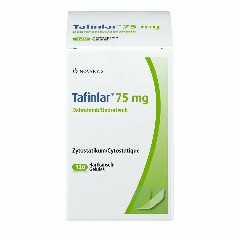
In clinical trials, the efficacy evaluation of dabrafenib is usually based on large amounts of patient data and rigorous statistical analysis. For example, in a global pivotal study in patients with BRAF V600E mutation-positive non-small cell lung cancer, dabrafenib combined with trametinib was used as first-line treatment, and the ORR was as high as 64%, with a median PFS of 14.6 months and a median OS of 24.6 months. These results indicate that dabrafenib exhibits significant efficacy in cancer treatment.
In general, dabrafenib, as a targeted anti-cancer drug againstBRAF V600 mutation, has shown good efficacy and safety in clinical trials. The efficacy evaluation is usually based on indicators such as ORR, PFS, OS, and DCR, and is verified through rigorous statistical analysis. These evaluation results provide strong support for the application of dabrafenib in cancer treatment.
[ 免责声明 ] 本页面内容来自公开渠道(如FDA官网、Drugs官网、原研药厂官网等),仅供持有医疗专业资质的人员用于医学药学研究参考,不构成任何治疗建议或药品推荐。所涉药品可能未在中国大陆获批上市,不适用于中国境内销售和使用。如需治疗,请咨询正规医疗机构。本站不提供药品销售或代购服务。


