
.jpeg)
Dabrafenib Latest News
-- Adjuvant dabrafenib/trametinib maintains survival benefit in patients with stage III melanoma, up to 10 years of follow-up
Dabrafenib (Tafinlar) and trametinib (Mekinist) combination therapy continued to show improved survival compared with placebo when used as adjuvant therapy in patients with stage III melanoma, despite overall survival (OS)and melanoma-specific survival, according to more than 8 years of follow-up results from the Phase 3 COMBI-AD trial (NCT01682083) published in 2024. (MSS) benefit was not statistically significant.
The final analysis showed that after 8 years, the OS rate was 71% in the combination group (n = 438) and 65% in the placebo group (n = 432). Median OS (NA) was not available in the combination group (95% CI, 120.7-NA) or placebo group (95% CI, NA-NA) (HR, 0.80; 95% CI, 0.62-1.01; P = .063). The median MSS in the ITT population was NA in both arms (HR, 0.78; 95% CI, 0.59-1.02); the 8-year MSS rate was 76% in the dabrafenib/trametinib arm and 70% in the placebo arm.
Additionally, in the intention-to-treat population, the risk of relapse was reduced by 48% in the combination arm compared with placebo (HR, 0.52; 95% CI, 0.43-0.63). Median recurrence-free survival (RFS) was 93.1 months (47.9-NA) compared with 16.6 months (12.7-22.1) in the placebo group, with RFS rates at 96 months being 50% and 35%, respectively.
In addition, the median distant metastasis-free survival (DFMS) was NA (95% CI, NA-NA) and 114.6 months in the combination arm versus placebo, respectively, representing a 44% reduction in the risk of distant metastasis (HR, 0.56; 95% CI, 0.44-0.71). The 8-year DFMS rate was 64% in the dabrafenib/trametinib group and 53% in the placebo group.
Results and early trial dataThe 3-year (86% and 77%, respectively) and 5-year (79% and 70%, respectively) OS rates were consistent. At 5 years of follow-up, median RFS (NR) was not reached in the combination arm (95% CI, 47.9-NR) compared with 16.6 months (95% CI, 12.7-22.1) in the placebo arm (HR, 0.51; 95% CI, 0.42-0.61). The 5-year RFS rates were 52% (95% CI, 48%-58%) and 36% (95% CI, 32%-41%), respectively.
Based on the COMBI-AD study results, dabrafenib combined with trametinib was approved by the FDA in April 2018 for the adjuvant treatment of patients with BRAF V600E/K mutations and lymph node involvement after complete resection.
The double-blind, placebo-controlled Phase 3 COMBI-AD trial enrolled patients with completely resected BRAF V600E/K mutant cutaneous melanoma. Patients were required to have stage IIIA, IIIB, or IIIC disease, have undergone resection within 12 weeks before randomization, and not have received prior systemic therapy. They also need to have an ECOG performance status of 0 to 1.
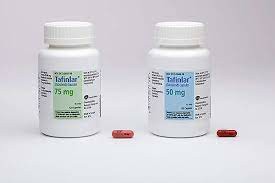
Participants were randomized to receive dabrafenib 150 mg twice daily and trametinib 2 mg once daily (n = 438) or matching placebo (n = 432). Treatment continued for up to 1 year or until relapse, unacceptable toxicity, withdrawal of consent, or death. Stratification factors include BRAF mutation (V600E or V600K) and disease stage (IIIA, IIIB, or IIIC).
The primary endpoint is RFS, and secondary endpoints are OS, DMFS, freedom from relapse, and safety.
The primary analysis included RFS (HR, 0.47; 95% CI, 0.39-0.58; P < .001), DMFS (HR, 0.51; 95% CI, 0.40-0.65), and OS (HR, 0.57; 95% CI, 0.42-0.79; P = .0006) data, with a median follow-up period of 34 months. The updated analysis included RFS and DMFS data with a median follow-up period of 44 months. The most recent previous analysis reported RFS and DMFS data with a median follow-up period of 60 months.
The results presented at the 2024 ASCO Annual Meeting are post hoc analyzes reporting RFS, DMFS, and MSS. Long noted that the last patient had his final visit on July 31, 2023, officially ending the trial.
OS was reported over the longest follow-up period, up to 125 months. The median follow-up period was 100.0 months (range, 0-125 months) in the combination group and 82.5 months (range, 1-122 months) in the placebo group. In OS analyses, 71% and 69% of patients were censored, respectively.
Relapse rates were 46% in the combination group and 63% in the placebo group. Twenty-nine percent and 31% of patients in both groups died; 23% and 26%, respectively, of these deaths were from melanoma. Fifty-one percent of patients in the combination group and 44% of patients in the placebo group were still on follow-up at the end of the study.
Baseline characteristics were balanced between the two groups. The median age in both groups was 50.5 years (range: 18-89 years), 45% of patients were male, and 91% had BRAF V600E status. Ninety-one percent of patients had an ECOG performance status of 0. Disease stage (AJCC 7) was broken down into stage IIIA (17.5%), stage IIIB (41%), stage IIIC (39.5%), and stage III unspecified (1.5%). Patients had 1 (41%), 2 or 3 (36.5%), more than 4 (17%), or unknown (6.5%) positive lymph nodes. Lymph node involvement was classified as microscopic (35.5%), macroscopic (36.5%), or unknown (27.5%). More than half of the patients had no primary tumor ulceration (58%), and the majority had no metastatic disease (89.5%).
OS benefit with dabrafenib/trametinib was observed in most predetermined subgroups except for the subgroup with BRAF V600K mutation (n = 37; HR, 1.95; 95% CI, 0.84-4.50).
Further study found that for patients withBRAF V600E mutation, the 8-year OS rate with dabrafenib/trametinib was 71%, compared with 63% with placebo (HR, 0.75; 95% CI, 0.58-0.96); while for patients with BRAF V600K mutation, dabrafenib/trametinib treatment The 8-year OS rate was 77% compared with 64% with placebo (HR, 1.95; 95% CI, 0.84-4.50).
In the BRAF V600E mutation subgroup, median RFS was 109.3 months (95% CI, 47.9-NA) in the dabrafenib/trametinib group and 16.6 months (95% CI, 12.7-22.1) in the placebo group (HR, 0.52; 95% CI, 0.42-0.63); BRAF V600K Across subgroups, median RFS was 55.5 months (95% CI, 22.5-NA) and 16.6 months (95% CI, 5.6-NA), respectively (HR, 0.59; 95% CI, 0.32-1.09). The 8-year RFS rates in the BRAF V600E mutation group were 51% and 35%, respectively, while the 8-year RFS rates in the BRAF V600K mutation group were 43% and 36%, respectively.
The median time to first systemic therapy after disease relapse was 8.6 weeks (range, 3.9-26.7 weeks) for patients in the dabrafenib/trametinib/trametinib group and 8.4 weeks (range, 4.6-25.1 weeks) for patients in the placebo group. Post-treatment systemic therapy was administered in 37% and 49% of patients, respectively. In the dabrafenib/trametinib arm, these treatments included anti-PD-1 (26%), anti-CTLA-4 (18%), BRAF-targeted therapy (21%; BRAF inhibitor, 21%; MEK inhibitor, 18%), chemotherapy (6%), biologic therapy (2%), investigational therapy (2%), or other (<1%).
In the placebo group, subsequent systemic therapy included anti PD-1 (22%), anti-PD-L1 (<1%), anti-CTLA-4 (19%), talimogene laherparepvec (<1%), BRAF-targeted therapy (37%; BRAF inhibitor, 37%; MEK inhibitor, 22%), chemotherapy (7%), biologic therapy (3%), or investigational therapy (5%).
Safety results were consistent with previous COMBI-AD reports, with most patients with malignancies experiencing resolution or recovery of events with dabrafenib/trametinib (73%) and placebo (86%). Long noted that there were no new safety concerns and no irreversible long-term toxicities, with malignancies occurring primarily in the first 3 years of follow-up. The rate of adverse cancer events was 12% in the combination group and 9% in the placebo group.
[ 免责声明 ] 本页面内容来自公开渠道(如FDA官网、Drugs官网、原研药厂官网等),仅供持有医疗专业资质的人员用于医学药学研究参考,不构成任何治疗建议或药品推荐。所涉药品可能未在中国大陆获批上市,不适用于中国境内销售和使用。如需治疗,请咨询正规医疗机构。本站不提供药品销售或代购服务。


