
.jpeg)
What is the best treatment for kidney cancer?
Renal cell carcinoma, a disease in which cancer cells are found in the lining of kidney tubules, is a common type of kidney cancer in adults. Faced with this serious health challenge, patients and medical teams need to work together to develop the best treatment plan in order to achieve the best treatment results. The choice of treatment plan needs to comprehensively consider the stage of the cancer, the patient's overall health status and personal preferences, and strive to maximize the patient's physiological functions and quality of life while controlling the disease.
Surgery, the first line of treatment for renal cell carcinoma, aims to directly remove the tumor or affected kidney. Partial nephrectomy is suitable for cases where the tumor is small and has not extensively invaded the kidneys. It aims to preserve as much kidney function as possible and ensure the patient's quality of life after surgery. When the tumor is large or has invaded important structures of the kidney, simple nephrectomy or radical nephrectomy becomes a necessary choice to completely remove cancer cells and prevent further deterioration of the condition.
However, surgery is not the only treatment option. For some patients, especially those whose tumors cannot be removed surgically, non-surgical therapies such as arterial embolization, cryosurgery, and thermal ablation offer new treatment possibilities. Arterial embolization blocks the blood supply of the tumor, causing it to shrink due to lack of oxygen and nutrients; cryosurgery uses low-temperature freezing technology to destroy tumor tissue; thermal ablation uses high-temperature heat to ablate tumors to achieve therapeutic purposes.
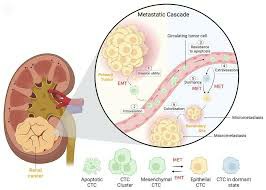
In addition to surgical and non-surgical therapies, immunotherapy and targeted therapy also play an important role in the treatment of renal cell carcinoma. Immunotherapy helps the immune system fight cancer more effectively by strengthening the patient's own immunity. Targeted therapy targets specific biomarkers of cancer cells and uses drugs or other substances to precisely attack cancer cells, reducing reliance on traditional chemotherapy and improving the pertinence and effectiveness of treatment.
It is worth noting that new treatments are constantly being developed and clinically tested. For some patients, participating in a clinical trial may be an option worth considering. By participating in clinical trials, patients not only have the opportunity to try new treatments but also contribute to the advancement of medical research.
Regular follow-up tests and examinations are also crucial during treatment. They can promptly detect signs of disease changes or cancer recurrence, providing doctors with a strong basis for adjusting treatment plans. At the same time, patients should also maintain close communication with the medical team, provide timely feedback on discomfort and concerns during the treatment process, and jointly cope with the challenges brought about by treatment.
To sum up, the best treatment plan for kidney cancer needs to be formulated according to the patient's specific situation, and a variety of methods such as surgery, non-surgical treatment, immunotherapy and targeted therapy should be comprehensively used in order to achieve the best treatment effect. During the treatment process, the patient's active cooperation and regular follow-up are equally important to ensure the smooth progress of the treatment.
(Click to view an introduction to drugs for the treatment of kidney cancer)
References:
https://www.cancer.gov/types/kidney/patient/kidney-treatment-pdq
[ 免责声明 ] 本页面内容来自公开渠道(如FDA官网、Drugs官网、原研药厂官网等),仅供持有医疗专业资质的人员用于医学药学研究参考,不构成任何治疗建议或药品推荐。所涉药品可能未在中国大陆获批上市,不适用于中国境内销售和使用。如需治疗,请咨询正规医疗机构。本站不提供药品销售或代购服务。


