
.jpeg)
Study on the potential efficacy of ensidipine in the treatment of leukemia
Enasidenib, an isocitrate dehydrogenase2 (IDH2) inhibitor , has shown potentially significant efficacy in the treatment of patients with acute myeloid leukemia (AML) carrying IDH2 gene mutations.
Ensidipine inhibits the activity of IDH2 enzyme and blocks its production of 2-hydroxyglutarate (2-HG), thereby restoring the normal metabolism and differentiation of cells. IDH2 gene mutations are more common in AML patients, and these mutations lead to ID Abnormal activity of H2enzyme produces excessive 2-HG. This metabolite can interfere with the normal differentiation and apoptosis of cells, thereby promoting the proliferation and survival of leukemia cells. Ensidipine achieves the purpose of treating leukemia by correcting this abnormal metabolism.
Multiple clinical trials have shown that ensidipine has achieved significant efficacy in the treatment of IDH2mutantAML patients. For example, in a clinical trial that included 199 patients, the objective response rate (ORR) of ensidipine reached 40.3%, of which the complete response rate was (CR) was 19.3%, and the partial response rate (PR) was 15.6%. In addition, ensidipine can significantly extend the progression-free survival (PFS) and overall survival (OS) of patients.
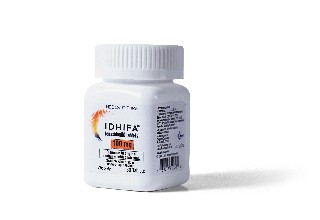
Ensidipine is not only useful in treatingAMLIt performs well in many aspects and can significantly improve patients’ quality of life. By inhibiting the proliferation and differentiation of leukemia cells, ensidipine can reduce patient symptoms such as anemia, bleeding, and infection. In addition, ensidipine can reduce patients' need for blood transfusions, further improving quality of life.
It is worth noting that the efficacy of ensidipine is not effective in all patients with IDH2 mutationsAML. Its efficacy may be affected by a variety of factors, including the patient's age, overall health, stage of the disease and other concomitant genetic abnormalities. Therefore, when using ensidipine to treat leukemia, it is necessary to individually evaluate the patient's condition and formulate a personalized treatment plan.
Although ensidipine has shown significant efficacy in the treatment of leukemia, its safety and tolerability still require attention. Some patients may experience side effects while taking ensidipine, such as nausea, vomiting, diarrhea, and increased bilirubin levels. Therefore, it is necessary to closely monitor the patient's response and safety during treatment and adjust the treatment plan in a timely manner.
References:
https://ashpublications.org/blood/article/130/6/722/36814/Enasidenib-in-mutant-IDH2-relapsed-or-refractory
[ 免责声明 ] 本页面内容来自公开渠道(如FDA官网、Drugs官网、原研药厂官网等),仅供持有医疗专业资质的人员用于医学药学研究参考,不构成任何治疗建议或药品推荐。所涉药品可能未在中国大陆获批上市,不适用于中国境内销售和使用。如需治疗,请咨询正规医疗机构。本站不提供药品销售或代购服务。


