
.jpeg)
The difference between mobosetinib/mobosetinib and fumetinib
Mobocertinib/ Mobocertinib and furmonertinib are two different tyrosine kinase inhibitors (TKIs). They have their own unique targets and indications in the treatment of non-small cell lung cancer (NSCLC). In clinical application, the two drugs target different types of mutations, so they also show many differences in treatment strategies.
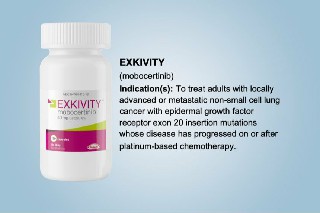
Mobosetinib is a highly selective oralTKI that is unique in that it is specifically designed to target epidermal growth factor receptor (EGFR) exon 20 insertion mutations. This mutation is a relatively rare but difficult-to-treat subtype of non-small cell lung cancer, and traditional treatments often fail to achieve ideal results. Mobosetinib provides a new treatment option for these patients by precisely identifying and inhibiting EGFR exon 20 insertion mutants. Its clinical trial results show that moboxetinib can significantly improve the progression-free survival (PFS) and overall survival (OS) of patients and is well tolerated, bringing hope to patients with locally advanced or metastatic EGFR exon 20 insertion mutation NSCLC.
In contrast, fumetinib is a third-generation EGFR-TKI that irreversibly binds to EGFR sensitizing mutants and T790M resistant mutants, thereby blocking the conduction of the EGFR signaling pathway. This property makes fumetinib excellent in the treatment of patients with EGFR T790M mutation-positive non-small cell lung cancer, especially those who have received at least one EGFR-TKI treatment and whose disease has progressed. The launch of fumetinib provides these patients with more effective treatment options and significantly extends their survival.
In terms of mechanism of action, although both moboxetinib and fumetinib exert anti-tumor effects by inhibiting theEGFR signaling pathway, their target selectivity and scope of action are different. Mobosetinib is more focused on EGFR exon 20 insertion mutants, while fumetinib broadly covers EGFR sensitizing mutants and T790M resistance mutants. This difference makes the two have different focuses in clinical application and provide precise treatment for different types of NSCLC patients.
In addition, the performance of the two in clinical data is also different. Clinical trial results of moboxetinib show that it can significantly reduce the risk of disease progression and improve the survival rate of patients with NSCLC with EGFR exon 20 insertion mutations. Fumetinib has shown significant efficacy in EGFR T790M mutation-positive patients, with good safety and high patient tolerance.
在副作用方面,两者也存在差异。虽然都属于TKI类药物,但由于靶向不同,导致它们的副作用谱和严重程度可能不同。 In clinical practice, doctors need to fully assess patients in order to select the most appropriate treatment plan and monitor and manage possible side effects.
总之,莫博赛替尼和伏美替尼在治疗非小细胞肺癌时,针对的分子靶点和患者群体有明显不同。前者专注于EGFR外显子20插入突变,而后者则着眼于EGFR T790M突变及其他敏感突变的治疗。 When doctors choose a treatment plan, they need to take into account the patient's specific genetic mutation and previous treatment history, and comprehensively consider the characteristics of the two drugs to achieve the therapeutic effect.
参考资料:https://atm.amegroups.org/article/view/92155/html
[ 免责声明 ] 本页面内容来自公开渠道(如FDA官网、Drugs官网、原研药厂官网等),仅供持有医疗专业资质的人员用于医学药学研究参考,不构成任何治疗建议或药品推荐。所涉药品可能未在中国大陆获批上市,不适用于中国境内销售和使用。如需治疗,请咨询正规医疗机构。本站不提供药品销售或代购服务。


