
.jpeg)
Can dermatofibroma become cancerous?
Dermatofibroma, also called cutaneous fibrous nodules, is usually a benign skin tumor that forms due to the overgrowth of fibrous tissue. These fibroids generally appear as hard, painless, smooth-surfaced skin nodules and are common in middle-aged and older people. They are usually slow-growing and small in diameter, but may gradually increase in size over time.
Can dermatofibroma become cancerous?
Generally speaking, dermatofibroma is a benign tumor and does not become cancerous. Most of them do not have the characteristics of malignant tumors, such as rapid growth, bleeding, ulceration or metastasis. Dermatofibromas are usually limited to the surface of the skin and do not spread to other parts of the body.
However, although dermatofibromas themselves are usually benign, in some special circumstances, a small number of dermatofibromas may become irregular and present a risk of malignant transformation. This transformation is extremely rare, but you may need to be alert when dermatofibromas mutate and show atypical features such as rapid growth, uneven color, or ulceration.
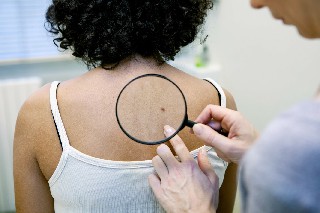
Risk factors for dermatofibroma
1.Family history: Certain family diseases, such as gene mutations, may lead to the occurrence of dermatofibroma and increase the risk of cancer.
2.Immune system problems: Individuals with weakened immune systems, especially those who use immunosuppressive drugs for a long time, may be at increased risk of skin tumors.
3.Environmental factors: Long-term exposure to strong ultraviolet rays or other environmental factors that may cause skin damage may also affect the formation and changes of dermatofibromas.
If a doctor suspects that dermatofibroma is at risk of becoming malignant, a skin biopsy is often performed to examine the tumor's cellular structure under a microscope. For most benign dermatofibromas, if there are no abnormal symptoms, your doctor may recommend regular observation without immediate treatment.
For some dermatofibromas that affect appearance or cause other uncomfortable symptoms, patients may choose to have them surgically removed. Surgical resection is generally a simple outpatient procedure, and recovery is usually good.
(Click to view an introduction to drugs for the treatment of dermatofibroma.)
xa0
Reference materials
1.Skin Fibromas: What You Need to Know. American Academy of Dermatology. Retrieved from https://www.aad.org
2.Fibrous Tumors of the Skin: Diagnosis and Management. Dermatology Online Journal. Retrieved from https://escholarship.org
[ 免责声明 ] 本页面内容来自公开渠道(如FDA官网、Drugs官网、原研药厂官网等),仅供持有医疗专业资质的人员用于医学药学研究参考,不构成任何治疗建议或药品推荐。所涉药品可能未在中国大陆获批上市,不适用于中国境内销售和使用。如需治疗,请咨询正规医疗机构。本站不提供药品销售或代购服务。


