
.jpeg)
Canafenib/bimetinib shows antitumor activity in untreated BRAF-mutated advanced non-small cell lung cancer
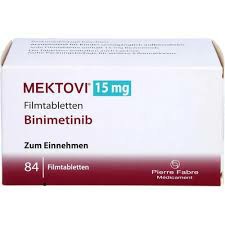
Canafenib/Encorafenib-Braftovi plus Binimetinib/Binimetinib-Mektovi in patients receiving BRAF Demonstrated anti-tumor activity in patients with V600E-mutated advanced non-small cell lung cancer (NSCLC), based on data from the Phase 2 ENCO-BRAF study (NCT04526782), which was presented at ESMO 2024.
At the March 2024 data cutoff, the investigator-assessed overall response rate (ORR) was 65.6% (95% CI, 53.7%-77.5%) in 40 of 61 patients in cohort a. 65.6% of patients had partial response (n=40), 19.7% of patients had stable disease (n=12), 8.2% of patients had progressive disease (n=5), and 6.6% (n=4) of patients could not be evaluated due to death (n=2) or toxicity (n=1). The study was designed to test the null hypothesis of an overall response rate of 40% or less in treatment-naive patientsand a surrogate [target] rate of at least 60%.
In an ongoing Phase 2, open-label, single-arm study, patients with previously untreated BRAF V600E-mutated NSCLC received canafenib 450 mg once daily and bimetinib 45 mg twice daily. Patients in cohort A (n=60) were (as indicated in the study) previously untreated, and patients in cohort B (n=59) included patients who had received 1 prior treatment.
Study-eligible patients must be at least 18 years of age, have WHO performance status of 0 or 1, be BRAF V600E mutated (recruited via local analysis), have no prior anti- BRAF cancer therapy, have stable central nervous system metastases, and be receiving first- or second-line therapy. Cohort A included 64 patients with a mean age of 70.7 years (range, 39.1-90.3 years). Baseline brain metastases occurred in 17.2% of patients (n=11), 46.9% of patients were male (n=30), and 35.9% of patients were never smokers (n=23).
The primary endpoint is ORR confirmed by the investigator based onRECIST v1.1 assessment every 8 weeks for 12 months and then every 12 weeks; secondary endpoints include duration of response (DOR), disease control rate (DCR), progression-free survival (PFS), overall survival (OS) and safety.
The medianDOR was 13 months (95% confidence interval[CI], 9.1 months not reached [NR]), and the DCR was 85.2% (95%CI, 76.3%-94.1%). Median progression-free survival and overall survival were 10.9 months (95% CI, 6.4-16.7 months) and not reached (95% CI, 20.7-NR), respectively.
Regarding safety, the most common treatment-related adverse events (TRAEss) included fatigue (42.2%), nausea (32.8%), and diarrhea (31.3%). Overall, 92.2% of patients (n=59) experienced any grade of TRAEs, with 50.0% (n=32) experiencing grade 3 or higher TRAEs. Dose interruptions for canafenib/bimetinib occurred in 32.8% (n=21) and 35.9% (n=23) of patients, respectively. Patients who received at least one dose reduction included 34.4% of canafenib (n=22) and 32.8% of bimetinib (n=21). Canafenib plus bimetinib was permanently discontinued due to TRAEs in 9.4% of patients (n=4); mortality occurred in 3.1% (n=2) of which 1 was caused by treatment-related dyspnea and 1 was caused by pulmonary embolism unrelated to treatment.
The study is currently enrolling patients in CohortB for second-line treatment of BRAF V600E-mutant non-small cell lung cancer. Based on this trial, the Enco-BRAF trial, and the PHAROS trial, canafenib plus bimetinib represents a potential new option for patients with BRAF V600E-mutant advanced NSCLC.
References:https://www.onclive.com/view/encorafenib-binimetinib-exhibits-anti-tumor-activity-in-untreated-braf-mutant-advanced-nsclc
[ 免责声明 ] 本页面内容来自公开渠道(如FDA官网、Drugs官网、原研药厂官网等),仅供持有医疗专业资质的人员用于医学药学研究参考,不构成任何治疗建议或药品推荐。所涉药品可能未在中国大陆获批上市,不适用于中国境内销售和使用。如需治疗,请咨询正规医疗机构。本站不提供药品销售或代购服务。


