
.jpeg)
Pharmacological effects of ALK/ROS1 targeted inhibitor lorlatinib
Lorlatinib (Lorlatinib), as an innovative small molecule targeted drug, belongs to the category of ALK inhibitors and is ALK positive. It brings new treatment hope to patients with chronic non-small cell lung cancer (NSCLC), especially those whose disease continues to progress after other ALK inhibitor treatments. This drug effectively curbs the growth and spread of tumors by precisely targeting and inhibiting the activities of ALK (anaplastic lymphoma kinase) and ROS1 (tyrosine kinase).
1.Precise mechanism of action
The pharmacological core of lorlatinib is that it can specifically block the signaling pathways mediated by ALK and ROS1 kinases. These two kinases play key roles in a variety of tumor cells, especially in certain types of lung cancer. Lorlatinib exerts its therapeutic effect through the following dual mechanisms:
Inhibition of kinase activity: Lorlatinib directly acts on ALK and ROS1 tyrosine kinases, blocking their activity, thereby cutting off the key signal transmission chain required for tumor cell growth, survival and metastasis, effectively inhibiting the growth momentum of tumors.
Fighting tumor metastasis: For lung cancer patients who have developed resistance to otherALK inhibitors, lorlatinib shows unique advantages. It can effectively cross the blood-brain barrier and inhibit the growth of brain metastasis cancer cells, demonstrating excellent anti-metastasis efficacy.
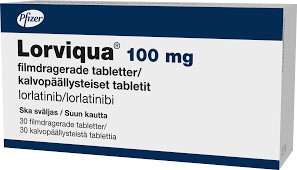
2.Unique pharmacokinetic properties
Lorlatinib not only has high oral bioavailability, but also has the ability to cross the blood-brain barrier, which makes it particularly good in the treatment of brain metastases from lung cancer. Its long half-life allows patients to take it only once a day, greatly improving the convenience of medication and patient compliance. At the same time, the clearance rate of the drug in the body is relatively slow, which can maintain a stable blood concentration and ensure the continuous development of the therapeutic effect.
Although lorlatinib has shown significant efficacy in the treatment ofALKpositive non-small cell lung cancer, some patients may still face drug resistance during long-term treatment. This is mainly attributed to mutations in the ALK and ROS1 genes. Fortunately, studies have shown that lorlatinib has certain adaptability to these mutations and can continue to exert its inhibitory effect on most drug-resistant mutant strains, providing patients with continued hope for treatment.
xa0
Reference materials
1."Lorlatinib for ALK-Positive Non-Small-Cell Lung Cancer"
https://www.nejm.org/doi/full/10.1056/NEJMoa2027183
2."CROWN Trial: Lorlatinib Shows Efficacy in First-Line ALK-Positive NSCLC"
https://www.cancer.gov/news-events/cancer-currents-blog/2020/lorlatinib-crown-alk-nsclc
[ 免责声明 ] 本页面内容来自公开渠道(如FDA官网、Drugs官网、原研药厂官网等),仅供持有医疗专业资质的人员用于医学药学研究参考,不构成任何治疗建议或药品推荐。所涉药品可能未在中国大陆获批上市,不适用于中国境内销售和使用。如需治疗,请咨询正规医疗机构。本站不提供药品销售或代购服务。


