
.jpeg)
How is ovarian cancer staged?
Ovarian cancer is a more serious cancer in the female reproductive system, and its incidence is gradually increasing. Ovarian cancer is staged by assessing how far the tumor has spread, a process that is important in planning treatment. There are currently four stages of ovarian cancer. Each stage can be subdivided into substages to provide more detailed information about the condition. In this staging system, lower numbers indicate milder disease and higher numbers indicate more severe disease. This staging method helps doctors assess a patient's prognosis and determine treatment strategies.
The first phase is divided into three sub-phases (Phase IA, Phase IB and Phase IC). Specifically, in stage IA, the cancer only occurs in one ovary or one fallopian tube and has not spread to other areas. In stage IB, the cancer affects both ovaries or fallopian tubes. In stage IC, the tumor not only exists in both ovaries or fallopian tubes, but has also spread to areas outside the ovaries, such as the peritoneal cavity. This stage is often considered early-stage ovarian cancer.
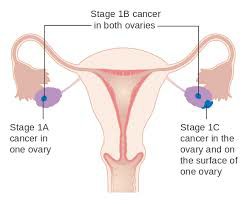
Stage 2 cancer has spread. In stage IIA, the cancer has spread to the uterus in addition to the ovaries or fallopian tubes. In stage IIB, the cancer has spread to other structures near the pelvis. Discovery at this stage usually means that the disease is progressing and the patient needs more aggressive treatment.
Stage III ovarian cancer is divided into three sub-stages. In stage IIIA, the cancer has spread from your pelvis to your abdomen (under a microscope) or lymph nodes. In stage IIIB, the tumor can be up to 2 centimeters in size and has spread outside the pelvis or to lymph nodes. In stage IIIC, the cancer is more serious. Not only has it metastasized to other parts of the body outside the pelvis, but the tumor is larger than 2 centimeters in size, it may affect other organs such as the liver and spleen.
Stage IV is the most serious stage of ovarian cancer. At this stage, the cancer has spread to the inside of an organ, such as the liver or spleen. In theIVA stage, cancer cells have been found near the lungs, indicating that the condition is extremely serious. In stage IVB, the cancer has spread to the lymph nodes in the groin or chest. This stage is usually accompanied by significant symptoms and is difficult to treat.
The staging of ovarian cancer is not only related to the patient's survival prognosis, but also directly affects the choice of treatment options. The doctor will discuss the best treatment strategy with the patient based on the staging results, including surgery, chemotherapy or radiotherapy. This personalized treatment plan can effectively improve patients' survival rate and quality of life.
In summary, the staging system for ovarian cancer provides clinicians with an important basis for evaluating and managing patients. Understanding the characteristics of each stage and its impact on the body can help patients and their families make informed decisions to better cope with this disease.
(Click to view an introduction to drugs for the treatment of ovarian cancer)
References:
https://my.clevelandclinic.org/health/diseases/4447-ovarian-cancer
[ 免责声明 ] 本页面内容来自公开渠道(如FDA官网、Drugs官网、原研药厂官网等),仅供持有医疗专业资质的人员用于医学药学研究参考,不构成任何治疗建议或药品推荐。所涉药品可能未在中国大陆获批上市,不适用于中国境内销售和使用。如需治疗,请咨询正规医疗机构。本站不提供药品销售或代购服务。


