
.jpeg)
What are the risk factors that increase the risk of ovarian cancer?
Ovarian cancer is a malignant tumor that affects the ovaries of women and is often difficult to detect in its early stages, so it is often diagnosed at an advanced stage. The pathogenesis of the disease is complex and involves the interaction of multiple biological and environmental factors. Although the exact cause of ovarian cancer is not fully understood, there are many known risk factors that may increase a woman's chance of developing the disease. Understanding these risk factors can help women better understand their own health conditions and take appropriate preventive measures.
First, age is one of the most significant risk factors for ovarian cancer. Research shows that a woman's risk of ovarian cancer rises sharply as she ages. Therefore, it is especially important for elderly women to have regular physical examinations and pay attention to changes in their own health.
Secondly, genetic changes are also important risk factors for ovarian cancer. Mutations in specific genes, such asBRCA1 and BRCA2, are widely believed to be associated with the development of ovarian cancer. Not only do these genes increase the risk of ovarian cancer, they are also linked to breast cancer risk. In addition, those who carry genetic mutations associated with Lynch syndrome are also more likely to develop ovarian cancer. Changes in other genes, such as BRIP1, RAD51C and RAD51D, have also been confirmed to be related to the occurrence of ovarian cancer. Therefore, genetic testing is crucial for female patients with a family history.
Furthermore, family history of ovarian cancer is also a factor worthy of concern. Women who have a direct relative with ovarian cancer are at significantly increased risk. This suggests that women should pay more attention to regular health screening and monitoring if they have a family history.
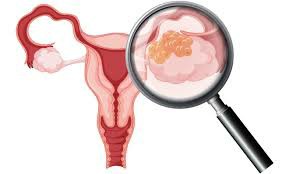
In addition, being overweight or obese is also thought to be a factor that increases the risk of ovarian cancer. Obesity triggers changes in hormone levels in the body, which may promote the growth of cancer cells. A reasonable diet and moderate exercise can help control weight and thereby reduce the risk of ovarian cancer.
The use of hormone replacement therapy after menopause is also a factor of concern. After menopause, many women choose hormone replacement therapy to relieve menopausal symptoms. However, some studies show that long-term use of this treatment may increase the risk of ovarian cancer. Before using hormone replacement therapy, women should fully communicate with their doctor to evaluate the potential risks and benefits.
In addition, endometriosis is also related to the occurrence of ovarian cancer. Endometriosis is a pathological condition in which endometrial tissue grows outside the uterus. This abnormal growth may cause inflammation and damage to the ovaries, thereby increasing the risk of cancer.
Finally, the age at which menstruation begins and ends may also affect ovarian cancer risk. Research shows that early menstruation (younger age at menarche) and late menopause (older age at menopause) are associated with the risk of ovarian cancer. A combination of both is more likely to increase the chance of illness.
In short, there are many risk factors for ovarian cancer, and women should have a comprehensive knowledge and understanding of these factors. By strengthening health awareness, regular check-ups and a reasonable lifestyle, the risk of ovarian cancer can be effectively reduced.
(Click to view an introduction to drugs for the treatment of ovarian cancer)
References:
https://www.mayoclinic.org/diseases-conditions/ovarian-cancer/symptoms-causes/syc-20375941
[ 免责声明 ] 本页面内容来自公开渠道(如FDA官网、Drugs官网、原研药厂官网等),仅供持有医疗专业资质的人员用于医学药学研究参考,不构成任何治疗建议或药品推荐。所涉药品可能未在中国大陆获批上市,不适用于中国境内销售和使用。如需治疗,请咨询正规医疗机构。本站不提供药品销售或代购服务。


