
.jpeg)
List of Chinese instructions for Bimetinib/Bemetinib
1. Common name:Binimetinib
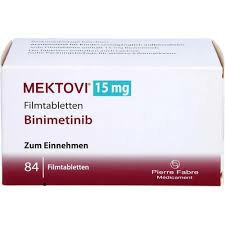
Product name:MEKTOVI
Other names: bimetinib, bemetinib
2. Who can take bimetinib? Indications?
Binimetinib is indicated to treat the following conditions:
1. BRAF V600E or V600K mutation-positive unresectable or metastatic melanoma: It can be used in combination with canafenib (Encorafenib) for the treatment of patients with unresectable or metastatic melanoma whose BRAF V600E or V600K mutation is detected by an FDA approved test.
2. BRAF V600E mutation-positive metastatic non-small cell lung cancer (NSCLC): Can be used in combination with canafenib to treat adult patients with BRAF V600E mutation-positive metastatic non-small cell lung cancer (NSCLC), as detected by an FDA-approved test.
3. What are the side effects of bimetinib?
In clinical studies, the most common adverse reactions in patients treated with bimetinib combined with canafenib include fatigue, nausea, diarrhea, vomiting, musculoskeletal pain, abdominal pain, visual impairment, constipation, dyspnea, rash and cough, etc. The incidence of these side effects is more than 25%;The use of bimetinib may also cause some serious adverse reactions, with an incidence rate of more than 2%, including bleeding, diarrhea, anemia, dyspnea, pneumonia, arrhythmia, infection, edema, myocardial infarction and pleural effusion, etc.
4. How should you take bimetinib?
1. Before treatment: Before starting treatment with bimetinib, the doctor will confirm the presence of BRAF V600E or V600K mutation in the tumor sample; if no mutation is detected in the plasma sample, the tumor tissue will be tested.
2. Recommended dose and usage: The recommended dose of bimetinib is 45 mg taken orally twice a day, with an interval of about 12 hours, and Canafenib was used in combination until disease progression or unacceptable toxicity.
Bimetinib can be taken with or without food. Do not take a missed dose within 6 hours of your next dose of bimetinib. If vomiting occurs after administration of bimetinib, do not take additional doses but continue with the next scheduled dose.
3. Dosage adjustment: If the patient experiences adverse reactions when using bimetinib, the doctor will adjust the dose of the drug according to the severity of the condition. The first dose can be reduced to 30mg orally administered twice a day. If 30mg cannot be tolerated, the drug will be permanently discontinued. If canafenib is permanently discontinued, discontinue bimetinib.
(1) Special Populations: For patients with moderate (total bilirubin levels >1.5 and ≤3 × ULN and any AST) or severe (total bilirubin levels >3 × ULN and any AST) hepatic impairment, the recommended dose is 30 mg orally twice daily.
5. How to store Bimetinib?
Bimetinib is supplied as 15 mg tablets and should be stored at 20°C to 25°C (68°F to 77°F); excursions allowed between 15°C and 30°C (59°F to 86°F).
6. How does bimetinib work?
Bimetinib is a reversible inhibitor of mitogen-activated extracellular signal-regulated kinase1 (MEK1) and MEK2 activity. MEK protein is an upstream regulator of the extracellular signal-related kinase (ERK) pathway. In vitro, bimetinib inhibited extracellular signal-related kinase (ERK) phosphorylation in cell-free assays, as well as survival and MEK-dependent phosphorylation in BRAF mutant human melanoma cell lines. Bimetinib also inhibited ERK phosphorylation and tumor growth in a BRAF mutant mouse xenograft model.
Bimetinib and canafenib target two different kinases in the RAS/RAF/MEK/ERK pathway. The combination of bimetinib and canafenib produced greater in vitro antiproliferative activity than either agent alone in a BRAF mutation-positive cell line and greater antitumor growth inhibition in a mouse BRAF V600E mutant human melanoma xenograft study. Additionally, the combination of bimetinib and canafenib delayed the emergence of BRAF V600E mutant human melanoma xenograft resistance in mice compared with either drug alone. In a mouse xenograft model derived from a patient with BRAF V600E mutant non-small cell lung cancer, the combination of bimetinib and canafenib had greater antitumor activity in inhibiting tumor growth compared with bimetinib alone. Increased tumor growth delay after drug withdrawal was also observed with the combination compared with either drug alone.
7. What will happen if you take too much bimetinib?
Since the binding rate of bimetinib/ to plasma proteins is 97%, hemodialysis may not be effective in treating overdose of bimetinib.
Reference materials:https://dailymed.nlm.nih.gov/dailymed/drugInfo.cfm?setid=6c3408ac-d401-4925-8a03-26591afbc240##
[ 免责声明 ] 本页面内容来自公开渠道(如FDA官网、Drugs官网、原研药厂官网等),仅供持有医疗专业资质的人员用于医学药学研究参考,不构成任何治疗建议或药品推荐。所涉药品可能未在中国大陆获批上市,不适用于中国境内销售和使用。如需治疗,请咨询正规医疗机构。本站不提供药品销售或代购服务。


