
.jpeg)
Clinical study of quizartinib in the treatment of acute myeloid leukemia
Quizatinib is an anti-cancer drug targeting a specific type of acute myeloid leukemia (AML). It is mainly used to treat adult patients who are FLT3-ITD positive. The drug is particularly suitable for patients whose disease has relapsed or failed to respond to previous treatments, and for patients who require continued treatment after hematopoietic stem cell transplantation (HSCT).
In a clinical trial calledQuANTUM-First (NCT02668653), researchers 539patients newly diagnosed with FLT3-ITDpositiveAML were studied in depth. This randomized, double-blind, placebo-controlled trial was designed to evaluate the effectiveness of quizartinib (VANFLYTA) in combination with standard chemotherapy. Prior to the start of the trial, patients' FLT3-ITD status was prospectively determined and retrospectively validated using the FDA-approved LeukoStrat® CDx FLT3 FLT3 mutation test. Patients were stratified and randomly assigned to VANFLYTA (268 people) or placebo (271 people) to ensure that the two groups were well balanced with respect to baseline demographics and disease characteristics.
All participants received combined induction and consolidation therapy and maintenance monotherapy according to initial assignment. This treatment course consists of an induction phase of a 7+3 regimen (cytarabine in combination with daunorubicin or idarubicin), followed by oral treatment with VANFLYTA or placebo, with the option of a second induction and high-dose cytarabine. After consolidation treatment, patients enter the maintenance treatment phase, which can last up to 36 cycles of 28 days.
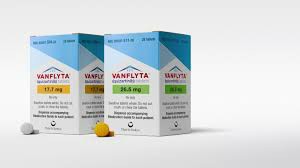
Regarding patient baseline characteristics, the median age was56 years, with an even distribution across gender, race, and performance status. Most patients have intermediate-risk cytogenetic features, and the frequency of the FLT3-ITD variant allele varies between patients. During the treatment process, approximately 20% of patients received a second round of induction therapy, and 65%of patients underwent at least one round of consolidation therapy, and 39% successfully entered maintenance therapy. Among them, a considerable number of patients have completed at least 12 or even longer cycles of maintenance treatment. In addition, approximately 29%of patients received HSCT after first complete remission (CR).
In terms of efficacy evaluation, the study mainly focused on the key indicator of overall survival (OS). After at least 24 months of follow-up, the results showed a significant improvement in OS in the VANFLYTA group, with a hazard ratio (HR) of 0.78. In the subgroup of patients who continued maintenance treatment with VANFLYTA after consolidation chemotherapy, the improvement in OS was more pronounced (HR=0.40
In addition, although the complete response rate (CR rate) was comparable between the VANFLYTA group and the placebo group, VANFLYTA
In summary, quizartinib (VANFLYTA) has demonstrated good efficacy and safety in the treatment of FLT3-ITDpositive AML, especially in combination with standard chemotherapy and maintenance treatment. The findings of this study provide new treatment options and hope for such patients.
xa0
References: https://dailymed.nlm.nih.gov/dailymed/drugInfo.cfm?setid=29cdbcfe-497d-4e78-bb7b-2d4acafe8e86
[ 免责声明 ] 本页面内容来自公开渠道(如FDA官网、Drugs官网、原研药厂官网等),仅供持有医疗专业资质的人员用于医学药学研究参考,不构成任何治疗建议或药品推荐。所涉药品可能未在中国大陆获批上市,不适用于中国境内销售和使用。如需治疗,请咨询正规医疗机构。本站不提供药品销售或代购服务。


