
.jpeg)
What are the late symptoms of pancreatic cancer?
Pancreatic cancer, a type of cancer, has a high mortality rate and is difficult to detect early. It originates from the pancreas - an important organ located deep in the abdominal cavity that is both an endocrine and an exocrine gland. The pancreas is responsible for secreting pancreatic juice to help digest food and producing hormones such as insulin to regulate blood sugar levels. However, pancreatic cancer occurs quietly when pancreatic cells undergo malignant mutations and grow uncontrollably.
Pancreatic cancer is often silent in its early stages, unlike some other cancers that have obvious early warning signs. The pancreas is hidden deep in the abdominal cavity and surrounded by other organs, making its early lesions difficult to detect through routine physical examination or imaging examinations. Therefore, when pancreatic cancer finally reveals its hideous face, it has often developed to an advanced stage, making treatment extremely difficult.
The symptoms of advanced pancreatic cancer are diverse and often intertwined, severely reducing patients' quality of life. Fatigue or unusual weakness is a common symptom among patients with advanced pancreatic cancer. This kind of fatigue is not caused by physical activity, but is like a feeling of powerlessness that goes deep into the bone marrow, making it difficult for patients to cope with even the trivial matters of daily life. This may be closely related to the depletion of cancer on the body, the decline in sleep quality, and the depression of mood.
Jaundice, a characteristic symptom, is particularly common in patients with advanced pancreatic cancer. When a tumor in the head of the pancreas compresses or invades the common bile duct, the excretion of bile is blocked, causing bilirubin to accumulate in the body, causing the eyes and skin to turn yellow. Jaundice not only affects the patient's appearance, but may also cause a series of symptoms, such as urine as dark as strong tea, stools that become lighter or even gray-white, and unbearable skin itching. The existence of these symptoms greatly reduces the patient's quality of life.
Weight loss and loss of appetite are also common symptoms in patients with advanced pancreatic cancer. The depletion of cancer causes patients to gradually lose weight, and loss of appetite further exacerbates weight loss. Some patients may even develop a state of cachexia, where they are extremely weak and life-threatening.
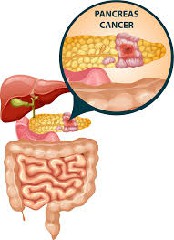
Pain in the abdomen or back, like a shadow, accompanies patients with advanced pancreatic cancer. This pain may be caused by the tumor compressing or invading surrounding organs, or it may be caused by the cancer spreading to the nerves surrounding the pancreas. The existence of pain makes it unbearable for patients and seriously affects their daily life and sleep quality.
Nausea and vomiting are also common symptoms in patients with advanced pancreatic cancer. When cancer presses on the far end of the stomach, food has difficulty passing through, causing nausea and vomiting. The presence of this symptom makes it difficult for patients to eat, further exacerbating weight loss and physical weakness.
In patients with advanced pancreatic cancer, an enlarged gallbladder or liver can sometimes be palpated. When cancer blocks the bile ducts, bile accumulates in the gallbladder, causing the gallbladder to become enlarged. When cancer spreads to the liver, it may also cause liver enlargement. The existence of these symptoms not only indicates the severity of the condition, but also brings physical discomfort to the patient.
In addition, patients with advanced pancreatic cancer may also develop symptoms of blood clots. Cancer may cause the blood to be in a hypercoagulable state, making it easier for blood clots to form. When blood clots appear in large veins, they may cause serious complications such as deep vein thrombosis or pulmonary embolism, which can endanger the patient's life.
It is worth mentioning that advanced pancreatic cancer may sometimes lead to the development of diabetes. This is because the tumor may have destroyed the insulin-producing cells in the pancreas, causing the patient's blood sugar levels to rise. The emergence of diabetes not only increases the difficulty of patient treatment, but may also further worsen the patient's condition.
In summary, the symptoms of advanced pancreatic cancer are complex, diverse, and often intertwined. The existence of these symptoms not only seriously affects the patient's quality of life, but also brings great challenges to treatment. Therefore, early detection and diagnosis of pancreatic cancer is crucial. Only early detection and early treatment can improve the cure rate of pancreatic cancer and prolong the survival period of patients.
(Click to view an introduction to drugs for the treatment of pancreatic cancer)
xa0
Reference materials:https://www.cancer.org/cancer/types/pancreatic-cancer/detection-diagnosis-staging/signs-and-symptoms.html
[ 免责声明 ] 本页面内容来自公开渠道(如FDA官网、Drugs官网、原研药厂官网等),仅供持有医疗专业资质的人员用于医学药学研究参考,不构成任何治疗建议或药品推荐。所涉药品可能未在中国大陆获批上市,不适用于中国境内销售和使用。如需治疗,请咨询正规医疗机构。本站不提供药品销售或代购服务。


