
.jpeg)
Larotrectinib Medication Guide for Children
Larotrectinib, as a targeted therapy for NTRK gene fusion-positive tumors, has received increasing attention in recent years for its use in pediatric patients. NTRKGene fusion is a common genetic change in a variety of solid tumors, especially in children's tumors, such as neuroblastoma, fibrosarcoma and other rare cancers. Larotrectinib's precise targeting properties give it unique advantages in the treatment of children's tumors.
1. Overview of indications and efficacy in children
Larotinib has been approved for use in adult and pediatric patients who areNTRK fusion positive. It is unique in that it can precisely act on specific genetic mutations in tumors while having less impact on normal cells. Larotrectinib undoubtedly provides new treatment hope for pediatric cancer patients for whom traditional treatments are ineffective or have severe side effects. Clinical study data show that larotrectinib has significant efficacy in children's NTRK fusion-positive tumors. Some patients have even achieved complete remission, and the proportion of tumors effectively controlled is relatively high.
Especially in malignant tumors such as neuroblastoma, larotrectinib has shown impressive efficacy. Even for pediatric patients 12 years old, the efficacy is equivalent to that of adult patients, and the side effects are mild. This discovery is of great significance for improving the treatment effect and quality of life of children with tumors.
2. Specific administration methods for pediatric patients
1.Dose adjustment:
For children weighing more than50kg, the same dose as for adults is recommended, i.e. 100 mg twice daily. However, the dosage can be adjusted appropriately according to the patient's tolerance.
For children weighing less than50kg, the dose needs to be calculated based on body surface area, usually 15mg per square meter of body surface area, twice daily. Again, dosage will be fine-tuned based on the patient's clinical response and side effects.
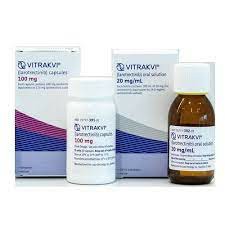
2.Drug form selection:
Larotinib is available in oral capsule and oral solution forms, making it easier for pediatric patients of different ages to choose. Oral solutions are more ideal for children who have difficulty swallowing or who are younger.
When using oral solutions, you must strictly follow the doctor's instructions to take the appropriate dose and ensure that the drug is fully dissolved before taking it.
3.Treatment cycle and adjustment:
The treatment cycle of larotrectinib is usually longer and needs to be continued until the disease is effectively controlled or the drug no longer produces obvious effects.
During the treatment process, the doctor may adjust the drug dosage or suspend treatment according to the patient's specific conditions to optimize the treatment effect and reduce side effects.
3. Side effect management and safety monitoring
Although larotrectinib is effective in pediatric patients, side effects are still a problem that cannot be ignored. Common side effects include fatigue, loss of appetite, nausea, vomiting, and abnormal liver function. Parents or guardians need to pay close attention to their children's physical condition and take their children for regular physical examinations and liver function tests to ensure the safety of the medicine.
If your child develops serious side effects, such as abnormal liver function, allergic reactions, or persistent discomfort, stop taking the medicine immediately and consult a doctor. The doctor will formulate corresponding treatment plans based on the child's specific situation, such as adjusting drug dosage, changing drugs, or taking other treatment measures.
4. Clinical research and efficacy verification
Multiple clinical trial data further verified the efficacy of larotrectinib in childrenNTRK fusion-positive tumors. Taking a clinical study on pediatric patients as an example, data showed that more than half of the pediatric patients achieved complete or partial remission after using larotrectinib, and the efficacy was stable and durable. At the same time, side effects are also within control, and most patients can tolerate the treatment.
These research results not only provide strong support for the application of larotrectinib in the treatment of children's tumors, but also bring new treatment hope to more children with NTRK fusion-positive tumors. However, it is worth noting that the use of larotrectinib still needs to be carried out under the guidance of a professional doctor, and the doctor's instructions must be strictly followed for dose adjustment and treatment monitoring.
In summary, larotinib, as a precision treatment drug forNTRK fusion-positive tumors, has demonstrated significant efficacy and good safety in pediatric patients. With the continuous deepening of clinical research and the accumulation of experience, we believe that larotrectinib will bring good news to more children with cancer and become a powerful weapon for them to defeat the disease.
xa0
Reference materials:
1.FDAOfficial drug information:https://www.fda.gov
2.Related papers in "New England Journal of Medicine" (NEJM):https://www.nejm.org
3.ClinicalTrials.gov:https://clinicaltrials.gov
[ 免责声明 ] 本页面内容来自公开渠道(如FDA官网、Drugs官网、原研药厂官网等),仅供持有医疗专业资质的人员用于医学药学研究参考,不构成任何治疗建议或药品推荐。所涉药品可能未在中国大陆获批上市,不适用于中国境内销售和使用。如需治疗,请咨询正规医疗机构。本站不提供药品销售或代购服务。


