
.jpeg)
What are the main indications for ponatinib?
Ponatinib is a highly effective targeted therapy drug approved by the U.S.FDA. It is mainly used to treat specific types of cancer, especially those cases that are resistant to traditional therapies. This drug helps control and slow the proliferation of cancer cells by inhibiting the activity of abnormal protein kinases. The main indications of ponatinib are wide and cover a variety of malignant tumors. The following is a detailed introduction to its indications:
Ponatinib has shown excellent results in the treatment of Philadelphia chromosome-positive acute lymphoblastic leukemia (Ph+ ALL). For patients with newly diagnosed Ph+ ALL, ponatinib can be used in combination with chemotherapy and received accelerated approval based on minimal residual disease (MRD)-negative complete response (CR) at the end of induction. This means that in clinical trials, the combined use of ponatinib and chemotherapy can significantly improve the complete remission rate of patients, and negative MRD indicates a better long-term prognosis for patients. However, continued approval for this indication may depend on further verification of clinical benefit in subsequent confirmatory trials. In addition, ponatinib can also be used as monotherapy to treat patients with Ph+ ALL who are not suitable for other kinase inhibitors, or patients with T315I-positive Ph+ ALL. Both cases demonstrate the unique value of ponatinib in the treatment of drug-resistant or refractory cases.
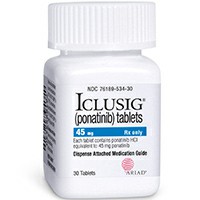
Ponatinib also plays an important role in the treatment of chronic myelogenous leukemia (CML). Ponatinib is an important treatment option for patients with chronic phase (CP) CML who are resistant or intolerant to at least two prior kinase inhibitors. Likewise, ponatinib can provide effective treatment for patients with accelerated phase (AP) or blast phase (BP) CML when no other kinase inhibitor is available. It is particularly worth mentioning that ponatinib is equally effective in patients with T315I-positive CML, whether in the chronic phase, accelerated phase or blast phase.
However, ponatinib also has its limitations. It is not suitable for use and is not recommended for the treatment of newly diagnosed patients with CP-CML, which is something physicians need to be aware of when using ponatinib.
In summary, ponatinib has demonstrated excellent clinical efficacy and a wide range of indications in the treatment of various types of cancer, especially cases that are resistant to traditional therapies.
xa0
Reference link:https://www.lls.org/drug/ponatinib
[ 免责声明 ] 本页面内容来自公开渠道(如FDA官网、Drugs官网、原研药厂官网等),仅供持有医疗专业资质的人员用于医学药学研究参考,不构成任何治疗建议或药品推荐。所涉药品可能未在中国大陆获批上市,不适用于中国境内销售和使用。如需治疗,请咨询正规医疗机构。本站不提供药品销售或代购服务。


