
.jpeg)
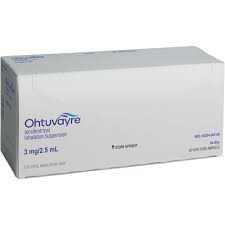
Ohtuvayre (Ensifentrine) - Ensifentrine is a promising adjunctive treatment option for COPD
Ohtuvayre (Ensifentrine) is a promising adjuvant treatment option in the treatment of chronic obstructive pulmonary disease (COPD), according to the results of a systematic review and meta-analysis published in Respiratory Medicine.
Researchers evaluated the efficacy and safety of exefantine, an emerging treatment option for COPD. Exefentine is a novel dual inhibitor of phosphodiesterase 3 (PDE3) and phosphodiesterase 4 (PDE4). Changes in forced expiratory volume in 1 second (FEV1), quality of life (QoL) measured by the St. George's COPD Respiratory Questionnaire (SGRQ-C), treatment-related adverse events (TEAEs) and dyspnea assessed by the transitional dyspnea index (TDI) were the primary outcomes.
From inception to early August 2024, the researchers conducted a systematic review and meta-analysis, searching the Web of Science, Embase, and PubMed databases to evaluate randomized controlled trials (RCTs) in patients with COPD treated with exefentine. Studies that lacked a control group or did not report baseline values u200bu200bwere excluded. Exefentine significantly enhances lung function, reduces dyspnea, and improves quality of life in COPD patients, especially at the 3 mg dose.
In total, 4 RCTs (duration 4 to 24 weeks) were included in the analysis. Study participants ranged in age from 40 to 80 years old and had a smoking history of more than 10 pack-years. Participants received varying doses of nebulized exefantine (0.375 mg to 6 mg) or a placebo control group. Background therapy used by participants varied; some patients used long-acting beta-agonists (LABAs), with or without inhaled corticosteroids (ICSs), or long-acting muscarinic antagonists (LAMAs), and some patients did not use long-acting maintenance therapy.
The researchers noted that3 mg of exefentine significantly improved FEV1 (least squares[LS] mean difference, 40.90 mL; 95% CI, 19.65-62.15). Improvement in dyspnea measured byTDI (LS mean difference, 0.91; 95% CI, 0.61-1.21; I2=0%), as did QoL SGRQ-C scores (LS mean difference, -1.92; 95% CI, -3.28 to -0.55). Compared with placebo, exefentine demonstrated a similar safety profile with no significant increase in TEAEs (hazard ratio, 1.02; 95% CI, 0.94-1.10).
At a dose of 0.75 mg, 2 studies reported mixed results, with a pooled LS mean difference of 0.43 and significant heterogeneity (I2=88%). When the dose was 1.5mg, the 2 studies showed a pooled mean difference of LS of 0.97, with significant heterogeneity (I2=74%). At6 mg, the average LS difference was 1.10, with no heterogeneity. A single study reported a mean LS difference of 0.30 using a 0.37 mg dose. Limitations of systematic reviews and meta-analyses include the limited number of studies and relatively small sample sizes.
Ensefentin significantly enhances lung function, reduces dyspnea, and improves quality of life in COPD patients, especially at the 3 mg dose," the researchers concluded. "The pooled findings support its potential as an adjuvant treatment for patients with persistent symptoms after standard treatment, addressing bronchoconstriction and inflammation, two major components of COPD pathophysiology," the study authors added.
Reference materials:https://www.pulmonologyadvisor.com/news/ensifentrine-is-promising-ancillary-copd-treatment-option/
[ 免责声明 ] 本页面内容来自公开渠道(如FDA官网、Drugs官网、原研药厂官网等),仅供持有医疗专业资质的人员用于医学药学研究参考,不构成任何治疗建议或药品推荐。所涉药品可能未在中国大陆获批上市,不适用于中国境内销售和使用。如需治疗,请咨询正规医疗机构。本站不提供药品销售或代购服务。


