
.jpeg)
Instructions for Fostamatinib
1. Drug information
Generic name: Fostamatinib (Fostamatinib)
Product name:Tavalisse, Tavlesse
Alias: fostatinib, fostatinib (transliteration)
2. Indications
Fotantinib is indicated to improve platelet counts in adult patients with chronic immune thrombocytopenia (ITP) who have had an inadequate response to prior therapy.
3. Usage and dosage
1. Recommended dose: The initial dose is 100 mg orally twice daily. After one month, if the platelet count does not reach at least 50*10^9/L, the dose should be adjusted to 150 mg twice daily. The goal is to use the minimum effective dose to maintain platelet counts at least 50*10^9/L to reduce the risk of bleeding. Fotantinib can be taken with or without food. If you miss a dose, make it up at the next time you take it.
2. Monitoring requirements: After the baseline assessment, complete blood count monitoring, including platelet count, is performed monthly until the platelet count is stable (at least 50*10^9/L). After stabilization, continue to monitor complete blood counts and neutrophils regularly. At the same time, liver function (such as ALT, AST and bilirubin) should be checked monthly, and blood pressure should be monitored every two weeks. After a stable dose is determined, monitoring will be changed to monthly.
3. Dose adjustment: Based on the patient’s safety and tolerability, the dose of fotantinib may need to be adjusted. If adverse reactions occur, the dose may need to be reduced or the medication may need to be suspended. For example, if the patient still experiences adverse reactions at the maximum dose, the dose can be reduced from 300 mg/day to 200 mg/day, or further reduced to 150 mg/day, or 100 mg/day (once in the morning). If it is necessary to reduce it to less than 100 mg/day, stop taking the medication.
4. Drug interactions: Concomitant use with strong CYP3A4 inhibitors may increase the exposure of R406, the main active metabolite of fotantinib, and dose adjustment should be considered in this case.
5. Medication discontinuation: If after 12 weeks of treatment, the platelet count has not reached a level to avoid clinically important bleeding, the use of fotantinib should be stopped.
4. Adverse reactions
Clinical studies have shown that common side effects of fotantinib include diarrhea, high blood pressure, nausea, respiratory tract infection, dizziness, elevated liver enzymes, rash, abdominal pain, fatigue, chest pain and decreased white blood cell count. Serious adverse reactions may include difficulty breathing and high blood pressure.
5. Supply and storage
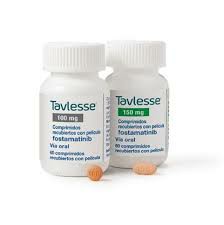
Fotantinib is available in 100mg and 150m ** dosage forms and is recommended to be stored at room temperature (20°C to 25°C) with an allowable deviation of 15°C to 30°C.
6. Treatment of overdose
Fortantinib has no specific antidote, and its active metaboliteThe amount of R406 cleared by dialysis is minimal. When overdose occurs, patients should be closely monitored for adverse effects and provided with supportive care.
7. Mechanism of action
Fortantinib is a tyrosine kinase inhibitor that specifically targets splenic tyrosine kinase (SYK). Its main metabolite R406 can inhibit the signaling of Fc receptors and B cell receptors, reduce antibody-mediated platelet destruction, and thereby improve platelet counts.
Reference materials:https://dailymed.nlm.nih.gov/dailymed/drugInfo.cfm?setid=21149cc3-049b-43e2-b141-c9499160556c
[ 免责声明 ] 本页面内容来自公开渠道(如FDA官网、Drugs官网、原研药厂官网等),仅供持有医疗专业资质的人员用于医学药学研究参考,不构成任何治疗建议或药品推荐。所涉药品可能未在中国大陆获批上市,不适用于中国境内销售和使用。如需治疗,请咨询正规医疗机构。本站不提供药品销售或代购服务。


