
.jpeg)
Axitinib/Axitinib Insert Guide
1. Generic name: Axitinib, Axitinib
Product name:Inlyta, Inlyta
Other names: axitinib
2. Indications:
Axitinib is indicated to treat the following conditions:
1. First-line advanced renal cell carcinoma (RCC): It can be combined with avelumab (avelumab) for the first-line treatment of patients with advanced renal cell carcinoma; or combined with pembrolizumab (pembrolizumab) for the first-line treatment of patients with advanced renal cell cancer.
2. Second-line advanced renal cell carcinoma: As a single drug, it is suitable for the treatment of advanced renal cell carcinoma after failure of previous systemic therapy.
3. Usage and dosage:
1. Recommended dosage:
(1)First-line treatment in combination with avelumab (avelumab): The recommended starting dose of axitinib is 5 mg orally twice daily, 12 hours apart, and may be used in combination with avelumab 800 mg as a 60-minute intravenous infusion every 2 weeks until disease progression or unacceptable toxicity occurs. When used together, consider increasing the dose of axitinib to more than the initial dose of 5 mg, with an interval of two weeks or more.
(2) in combination with pembrolizumab as first-line treatment: Recommended initiation of axitinib The dose is 5 mg orally twice daily, 12 hours apart, in combination with pembrolizumab (200 mg every 3 weeks or 400 mg every 6 weeks) as an intravenous infusion over 30 minutes until disease progression or unacceptable toxicity occurs. When used together, consider increasing the dose of axitinib to more than the initial dose of 5 mg with an interval of 6 weeks or longer.
(3) Second-line treatment: When axitinib is used as a single agent, the recommended starting oral dose is 5 mg twice daily, with or without food, approximately 12 hours apart.
2. Medication management: It is recommended that patients swallow the tablets whole with a full glass of water. If the patient vomits or misses a dose, he or she should not take another dose. Patients take their next prescribed dose at their usual time.
3. Dose adjustment: Increase or decrease the dose according to individual safety and tolerance. The dose may be increased in patients who tolerate axitinib for at least two consecutive weeks without grade 2 or higher adverse reactions (according to the Common Toxicity Criteria for Adverse Events [CTCAE]), who are normotensive and who are not receiving antihypertensive medications during treatment.
4. Adverse reactions:
In clinical studies of axitinib, the most common side effects were diarrhea, hypertension, fatigue, dysphonia (speech disorder), nausea, vomiting, decreased appetite, weight loss, palmar-plantar dysesthesia syndrome (rash and numbness on the palms and soles), bleeding, hypothyroidism (low thyroid function), proteinuria, cough, and constipation. After axitinib was marketed, adverse events such as vascular diseases such as arteries (including aortas), aneurysms, dissections and ruptures also occurred.
5. Supply and storage:
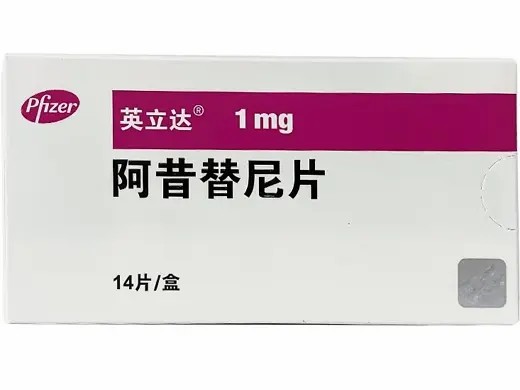
Axitinib tablets are supplied in 1 mg and 5 mg strengths and can be stored at 20°C to 25°C (68°F to 77°F); tolerances are 15°C to 30°C (59°F to 86°F).
6. Mechanism of action:
Axitinib has been shown to inhibit receptor tyrosine kinases, including vascular endothelial growth factor receptor (VEGFR)-1, VEGFR-2, and VEGFR-3, at therapeutic plasma concentrations. These receptors have been implicated in pathological angiogenesis, tumor growth, and cancer progression. Axitinib inhibits VEGF-mediated endothelial cell proliferation and survival in vitro and in mouse models. In tumor xenograft mouse models, axitinib was shown to inhibit tumor growth and VEGFR-2 phosphorylation.
Reference materials:https://dailymed.nlm.nih.gov/dailymed/drugInfo.cfm?setid=84137882-e000-47da-bd5b-fa76ab3c76f9##
[ 免责声明 ] 本页面内容来自公开渠道(如FDA官网、Drugs官网、原研药厂官网等),仅供持有医疗专业资质的人员用于医学药学研究参考,不构成任何治疗建议或药品推荐。所涉药品可能未在中国大陆获批上市,不适用于中国境内销售和使用。如需治疗,请咨询正规医疗机构。本站不提供药品销售或代购服务。


