
.jpeg)
About the role and efficacy of Gilteritinib
Gilteritinib (Gilteritinib) is a targeted drug mainly used to treat acute myeloid leukemia (AML), especially those with FLT3 receptor mutations. FLT3 is a tyrosine kinase involved in signaling pathways for cell proliferation and survival. In acute myeloid leukemia, internal tandem repeat (ITD) mutations and tyrosine kinase domain (TKD) mutations of FLT3 can lead to abnormal activation of this signaling pathway, thereby promoting tumor occurrence and development.
Giritinib performed quite well in preclinical trials, with its half inhibitory concentration (IC50) for wild-type receptors being 5 nM, while its IC50 for ITD mutant receptors ranged from 0.7 to 1.8 nM. This indicates that giritinib is extremely selective and potent against the FLT3 ITD mutant receptor. At the same time, giritinib has also shown inhibitory effects on other related tyrosine kinases, such as AXL and ALK. These receptors play key roles in tumor cell growth and chemotherapy resistance mechanisms.
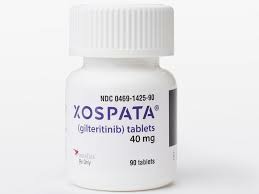
In specific clinical studies, giritinib has demonstrated significant therapeutic effects. In the phase I/II clinical trial, the comprehensive complete response rate reached 41%, the overall response rate was 52%, the median response duration was 20 weeks, and the median overall survival was 31 weeks. These data demonstrate that giritinib can effectively control the disease and improve patient survival prognosis. In phase III clinical trials, 21% of patients reported complete response, which further verified the effectiveness of its clinical application.
The mechanism of action of giritinib mainly includes the inhibition of phosphorylation ofFLT3 and its downstream targets. By blocking the activity of the FLT3 signaling pathway, giritinib can interfere with the phosphorylation process of key proteins such as STAT5, ERK and AKT, which play an important role in the proliferation and survival of tumor cells. In addition, the inhibitory effect of AXL is also considered to be an important mechanism of giritinib in the treatment of acute myeloid leukemia, because AXL has been shown to be closely related to chemotherapy resistance.
Current research points out that about30% of patients with acute myeloid leukemia have mutation-activated FLT3 type, especially ITD mutations, which are directly related to poor prognosis of patients. TKD mutations often lead to resistance to FLT3 inhibitors, making effective treatment options for these mutations particularly important. As a new type of FLT3 inhibitor, giritinib provides a new treatment option for these patients.
In short, gilitinib targets Specific inhibition of FLT3 receptor demonstrates its important value in the treatment of acute myeloid leukemia. With in-depth research on its mechanism of action, giritinib is expected to bring life to more patients, while also providing us with new ideas to deal with the clinical challenge of tumor drug resistance. In the future, giritinib will undoubtedly play an increasingly important role in the management of patients with FLIT3 mutations.
Reference materials:https://go.drugbank.com/drugs/DB12141
[ 免责声明 ] 本页面内容来自公开渠道(如FDA官网、Drugs官网、原研药厂官网等),仅供持有医疗专业资质的人员用于医学药学研究参考,不构成任何治疗建议或药品推荐。所涉药品可能未在中国大陆获批上市,不适用于中国境内销售和使用。如需治疗,请咨询正规医疗机构。本站不提供药品销售或代购服务。


