
.jpeg)
How does lomustine capsules exert its anti-cancer effect?
Lomustine capsule (Lomustine) is an alkylating agent chemotherapy drug that interacts with the DNA of tumor cells and interferes with their normal functions, thereby achieving anti-cancer effects. The following is a detailed introduction to the anti-cancer mechanism of lomustine capsules:
1.DNAAlkylation: Lomustine generates active compounds after metabolic transformation in the body. These active compounds can alkylate with the DNA of tumor cells. Alkylation reaction refers to the combination of the chemical group of the drug with the base of the DNA molecule, resulting in a change in the structure of the DNA. This change will cause the DNA chain to break, severely damaging the genetic information of tumor cells, thereby inhibiting cell division and proliferation, and leading to the death of tumor cells.
2.InhibitionDNAreplication and repair: The impact of alkylatedDNA damage on cells is not only reflected in their division process, but also affects the cell's DNA repair mechanism. Normal cells can restore DNA damage through repair mechanisms, but due to the rapid proliferation of tumor cells, the repair mechanisms are often unable to effectively respond to damage caused by drugs. Lomustine further aggravates the genomic instability of cells by preventing tumor cells from repairing damaged DNA, leading to the death of tumor cells.
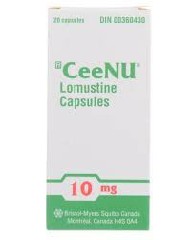
3.Penetration of the blood-brain barrier: Lomustine capsules have strong fat solubility and can effectively penetrate the blood-brain barrier. This makes it particularly effective in treating brain tumors such as gliomas. Many other anti-cancer drugs are difficult to effectively treat brain tumors because they cannot cross the blood-brain barrier. However, lomustine can directly act on brain tumor cells and inhibit the growth and spread of tumors through DNA alkylation.
4.Selectively acts on cancer cells: Although lomustine is a chemotherapy drug, its toxicity to normal cells is usually lower than its toxicity to tumor cells. Cancer cells typically proliferate faster than normal cells, so they are less able to repairDNAdamage. Furthermore, the genomes of cancer cells are often in a higher state of instability and are more vulnerable to attack by alkylating agents. This property allows lomustine to more selectively kill tumor cells when treating cancer, while having relatively little effect on normal cells.
In summary, lomustine effectively exerts anti-cancer effects by alkylatingDNA, interfering with cell repair mechanisms, crossing the blood-brain barrier and selectively acting on cancer cells.
[ 免责声明 ] 本页面内容来自公开渠道(如FDA官网、Drugs官网、原研药厂官网等),仅供持有医疗专业资质的人员用于医学药学研究参考,不构成任何治疗建议或药品推荐。所涉药品可能未在中国大陆获批上市,不适用于中国境内销售和使用。如需治疗,请咨询正规医疗机构。本站不提供药品销售或代购服务。


