
.jpeg)
What is the mechanism of action of enzalutamide?
Enzalutamide is an anticancer drug used to treat prostate cancer, particularly in patients with castration-resistant prostate cancer (CRPC) who have developed hormone resistance. It is a selective androgen receptor antagonist that mainly exerts anti-cancer effects by inhibiting the androgen receptor (AR) signaling pathway. Enzalutamide is widely used in clinical practice and has shown significant efficacy, especially in the treatment of advanced or metastatic prostate cancer.
Enzalutamide’s mechanism of action is by directly inhibiting the activity of the androgen receptor (AR). Androgen is an important hormone in the male body. It mainly binds to androgen receptors and initiates a series of intracellular signaling pathways to promote the growth and proliferation of prostate cancer cells. Enzalutamide binds to androgen receptors and prevents androgens from binding to the receptors, thereby inhibiting receptor activation, preventing cancer cell proliferation and inducing cancer cell apoptosis.
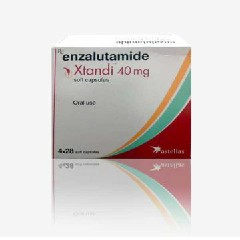
Enzalutamide not only antagonizes the effects of androgen receptors, but also inhibits the nuclear translocation of androgen receptors. When not activated, the androgen receptor is usually located in the cytoplasm. When activated, it moves to the nucleus, initiates transcription and activates genes related to prostate cancer cell proliferation. Enzalutamide blocks the transfer of androgen receptors from the cytoplasm to the nucleus, further inhibiting prostate cancer proliferative signaling.
Enzalutamide can also reduce androgen levels in prostate cancer cells by inhibiting the androgen synthesis pathway. Although castration therapy can significantly reduce androgen levels in the body, some prostate cancer cells are still able to synthesize androgens through other pathways. By reducing the synthesis of these androgens, enzalutamide further enhances its inhibitory effect on cancer cells, especially those castration-resistant prostate cancer cells that rely on androgen synthesis.
Another important feature of enzalutamide in clinical treatment is its ability to slow down the metastasis process of prostate cancer, especially the control of bone metastasis. Studies have shown that enzalutamide can effectively slow down the progression of bone metastasis and significantly extend the survival of patients. Through its unique mechanism of action, enzalutamide not only improves the clinical symptoms of prostate cancer patients, but also significantly improves the patients' quality of life.
[ 免责声明 ] 本页面内容来自公开渠道(如FDA官网、Drugs官网、原研药厂官网等),仅供持有医疗专业资质的人员用于医学药学研究参考,不构成任何治疗建议或药品推荐。所涉药品可能未在中国大陆获批上市,不适用于中国境内销售和使用。如需治疗,请咨询正规医疗机构。本站不提供药品销售或代购服务。


