
.jpeg)
First- and second-line Avapritinib or midostaurin prolongs OS, DOT in advanced systemic mastocytosis
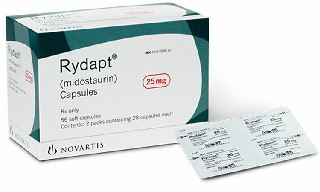
Based on Retrospective analysis of the phase 2 PATHFINDER study (NCT03580655) and results of a real-world retrospective chart review (NCT04695431) presented during the 2024 ASH Annual Meeting, in standard clinical practice, In patients with advanced systemic mastocytosis, treatment with avapritinib resulted in significant improvements in overall survival (OS) and duration of treatment (DOT) in the first-line setting compared with midostaurin and best available therapy (BAT) in the second-line and second-line settings.
In the first-line analysis, mortality during follow-up was 10.5% in patients treated with avatinib (n=38) and 56.9% in patients treated with midostaurin (n=58). Unweighted median OS (NR; 95% CI, not estimable [NE]-NE) was not reached in the avatinib cohort and 28.6 months (95% CI, 18.2-49.8) in the midostaurin cohort (P<0.001). The unweighted median DOT was 41.3 months (95% CI, 33.9-NE) in the avatinib cohort and 11.6 months (95% CI, 7.5-22.1) in the midostaurin cohort. However, in an inverse probability of treatment weighted (IPTW) Cox analysis, avapritinib treatment significantly prolonged OS (HR, 0.19; 95% CI, 0.06-0.57; P=0.003) and DOT (HR, 0.37; 95% CI: 0.19, 0.70; P=0.002) compared with midostaurin in both.
In second-line and follow-up analyses, mortality during follow-up was 25.4% and 68.5% for patients in the avatinib group (n=67) and BAT group (n=73), respectively. The unweighted median OS was NR (95% CI, NE-NE) in the avatinib group and 20.3 months (95% CI 14.9-33.9) in the BAT group (P<0.001). The unweighted median point was 24.0 months (95% CI, 20.8-NE) in the avatinib group and 5.2 months (95% CI, 3.1-8.1) in the BAT group. According to IPTW weighted Cox analysis, avapritinib significantly increased OS (HR, 0.34; 95% CI, 0.16-0.75; P=0.008) and DOT (HR, 0.35; 95% CI: 0.21-0.58; P<0.001).
It is worth noting that The DOT analysis included 97 courses, of which 7 courses were excluded due to unknown discontinuation dates and unknown last known prescription dates. This study supports the use of avapritinib as a first-line treatment for advanced systemic mastocytosis and also supports the use of avapritinib as a second-line treatment [and beyond]. In the absence of randomized controlled trials, these data provide important insights into superior efficacy and suggest that avapritinib is well tolerated compared with midostaurin and other therapies available for patients with advanced systemic mastocytosis and may aid in treatment decisions.
Analysis of baseline characteristics: The first-line analysis included38 patients who received avatinib and 58 patients who received midostaurin. The mean age at treatment initiation (68.3 years in the avapotinib group; 67.4 years in the midostaurin group) was comparable between the avapritinib and midostaurin groups. Of note, in the avatinib versus midostaurin cohort, the SRSF2/ASXL1/RUNX1 group had a higher proportion of patients with one or more mutated genes. The percentage of patients with serum tryptase levels above 125 ng/mL at baseline was also comparable between the two groups (71.1%; 69.0%).
The second-line analysis included67 patients who received avatinib and 73 patients who received BAT. In the BAT group, patients received a total of 104 treatments. The mean age at treatment initiation (66.6; 11.7) was also similar between the avatinib and BAT cohorts. There are 89 treatments that provide information on drugs administered as BAT. Commonly used second-line or later drugs include midostaurin (46.1%), cladribine (32.6%), and hydroxyurea (7.9%).
At baseline, a higher proportion of patients treated with avatinib had elevated serum tryptase (80.6%; 65.4%) and received TKIs (89.6%; 48.1%) than patients treated with BAT. However, more patients in the BAT group had 1 or more mutated genes in the SRSF2/ASXL1/RUNX1 group compared with the avatinib cohort.
Reference materials:https://www.onclive.com/view/first--and-later-line-avapritinib-prolongs-os-dot-in-advanced-systemic-mastocytosis
[ 免责声明 ] 本页面内容来自公开渠道(如FDA官网、Drugs官网、原研药厂官网等),仅供持有医疗专业资质的人员用于医学药学研究参考,不构成任何治疗建议或药品推荐。所涉药品可能未在中国大陆获批上市,不适用于中国境内销售和使用。如需治疗,请咨询正规医疗机构。本站不提供药品销售或代购服务。


