
.jpeg)
Clinical efficacy and safety data of adagrasib (Krazati) in the treatment of patients with brain metastases
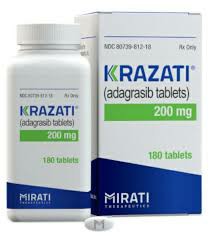
Adagrasib (trade name: Krazati) is a new KRAS G12C inhibitor, specifically used to treat patients with non-small cell lung cancer (NSCLC) and other tumors with KRAS G12C mutations. Compared with similar drugs, adagrasiib has the characteristics of long pharmacokinetic half-life and strong tissue penetration, which allows it to have a certain drug exposure concentration in the central nervous system (CNS), so it is expected to have potential in the treatment of patients with brain metastases. This feature breaks through the limited efficacy of traditional KRAS targeted drugs on brain metastases and provides a new treatment option for this high-risk population.
Clinical trial data show that adagrasib can significantly control intracranial lesions in patients carrying KRAS G12C mutations and accompanied by brain metastases. Research results show that some patients with brain metastases have experienced an increase in intracranial objective response rate (ORR) after receiving adagrasib treatment, and some patients have significantly reduced tumor size, and even experienced complete remission. At the same time, progression-free survival (PFS) has been extended in this patient group, which means that adagrasib can not only control lung lesions, but also show positive effects on brain metastases.
In terms of safety, adagrasib is generally well tolerated. Common adverse reactions include diarrhea, nausea, vomiting, decreased appetite, fatigue, and mild elevation of aminotransferases. Most adverse events were grade 1-2 and could be controlled with supportive care or dose adjustment. For patients with brain metastases, no obvious central nervous system toxicity was seen due to the drug, which suggests that the safety risks of adagrasib are still within the controllable range while maintaining intracranial disease control.
Overall, adagrasib has demonstrated considerable efficacy and good safety in KRAS G12C mutated NSCLC patients with brain metastasis. Its ability to penetrate the blood-brain barrier provides a new solution for patients with brain metastases who previously lacked effective treatments. In the future, with the accumulation of more clinical data and the exploration of combined applications with other treatment modalities (such as immunotherapy or chemotherapy), adagrasib is expected to further improve the long-term survival and quality of life of patients with brain metastases.
Reference link:https://www.drugs.com
[ 免责声明 ] 本页面内容来自公开渠道(如FDA官网、Drugs官网、原研药厂官网等),仅供持有医疗专业资质的人员用于医学药学研究参考,不构成任何治疗建议或药品推荐。所涉药品可能未在中国大陆获批上市,不适用于中国境内销售和使用。如需治疗,请咨询正规医疗机构。本站不提供药品销售或代购服务。


