
.jpeg)
Comparison of efficacy and applicable patients between Tepotinib (Tuodekang) and Capmatinib
In recent years, targeted therapy for non-small cell lung cancer (NSCLC) has developed rapidly, especially for patients with MET driven lung cancer. METGene abnormalities, including METexon14skipping mutations (METex14) and MET gene amplification are NSCLC one of the important molecular driving factors. Oral small molecule inhibitors of this target, such as Tepotinib and Capmatinib, have been approved globally for the treatment of advanced or metastatic NSCLC. Since both are MET inhibitors, patients and doctors often compare their efficacy and applicable groups in clinical practice to choose the most appropriate treatment plan.
1. Overview of Drugs
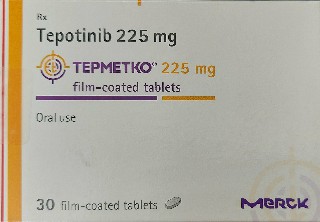
Tepotinib (Tepotinib, trade name TEPMETKO) is produced by Merck (Merck Research and development, it is a highly selective oral MET inhibitor, mainly targeting METex14 mutated advanced NSCLC. In 2020, tepotinib was approved for marketing in many countries for the treatment of METex14mutatedNSCLC patients who have previously received chemotherapy or are ineffective for chemotherapy.
Capmatinib (Capmatinib, trade nameTabrecta) was developed by Novartis (Novartis) and is also an oral small moleculeME Tinhibitors, targeting METexon14 skipping mutations and METamplifications of NSCLC patients. Capmatinib was approved slightly earlier, and its efficacy has been shown to be significant in patients with METex14 mutations and high-level MET amplifications. Both work by blockingMETTyrosine kinase activity inhibits downstream signaling pathways (such as PI3K/AKT, RAS/MAPK), achieving the effect of inhibiting tumor proliferation and metastasis.
2. Comparison of efficacy
Clinical studies have shown that tepotinib has good efficacy in patients with METex14 mutationsNSCLC. VISIONThe data from the VISION study showed that among patients who had previously received chemotherapy, the efficacy of tepotinib was The objective response rate (ORR) is approximately 46%, and the median sustained response time is approximately 11.1 pan> months; in patients without chemotherapy, the ORR can be as high as 57%, indicating that it has better efficacy in treatment-naïve patients.
Capmatinib inGEOMETRY The mono-1 study shows that for METex14mutatedNSCLC patients, the treated ORR is about 41% span>, without chemotherapy, the ORR is about 68%, and the median sustained response time is between 9 and 12 months. Overall, the efficacy of the two is similar, but in some patients who have not received chemotherapy, capmatinibORR is slightly higher, while tepotinib shows advantages in tolerability and disease control rate in previously treated patients.
In terms of safety, the adverse reactions of the two drugs have similar characteristics, mainly including edema, nausea, fatigue and hematological abnormalities. The incidence of edema is slightly higher with tepotinib, and the hematological abnormalities with capmatinib are more obvious, but overall they can be managed through dose adjustment or symptomatic treatment.
3. Analysis of applicable patients
The applicable patients for both are MET driven advanced or metastatic NSCLC patients, but there are subtle differences:
1.Tepotinib
It is mainly targeted at patients with positive skipping mutations in exon 14 of MET and is especially suitable for patients who have previously received chemotherapy or other treatments that have failed.
It is well tolerated by elderly patients and those with comorbidities, and can be used as a single-drug regimen.
2.Capmatinib
Indications include METex14 mutations and some patients with high-level MET amplification.
Clinical data show that treatment-naïve patients without chemotherapy have better outcomes, so it may also be considered when METex14 mutations are first discovered.
Additional advantages in patients with MET amplification-driven disease, whereas tepotinib has limited data in patients with MET amplification.
Therefore, the choice of which drug to take depends on the patient's mutation type, previous treatment history, physical condition and drug availability. For treatment-naïve patients with METex14 mutations, capmatinib may have a slight advantage; while for previously treated patients or elderly patients with weak tolerance, tepotinib is a reasonable choice.
4. Summary and clinical significance
In general, both tepotinib and capmatinib are MET inhibitors and have shown good efficacy and disease control capabilities in METex14mutatedNSCLC patients. There is little difference in efficacy between the two, but there are subtle differences in different patient groups and specific mutation types. Clinical decisions should be based on genetic testing results, previous treatment history and individual patient needs, while paying attention to drug tolerance and adverse reaction management. In the future, with the accumulation of combined treatment options, resistance mechanism research and more real-world data, the application prospects of the two in MET driven lung cancer treatment will become clearer, providing patients with more precise treatment options.
Reference link:https://www.drugs.com
[ 免责声明 ] 本页面内容来自公开渠道(如FDA官网、Drugs官网、原研药厂官网等),仅供持有医疗专业资质的人员用于医学药学研究参考,不构成任何治疗建议或药品推荐。所涉药品可能未在中国大陆获批上市,不适用于中国境内销售和使用。如需治疗,请咨询正规医疗机构。本站不提供药品销售或代购服务。


